Is keratoconus affecting your quality of life? You've probably heard about several ways to treat it, corneal transplantation, corneal cross-linking (CXL), and intracorneal ring segments (ICRS). So what exactly are corneal rings? When are they used? And do they suit every keratoconus patient? This article answers each of those questions, and it's designed to be your reference for everything you need to know about ICRS.
What Are Corneal Rings (ICRS)?
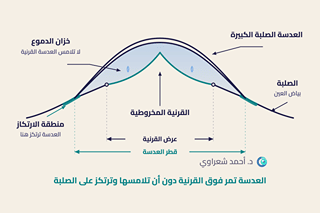
Intracorneal ring segments (ICRS) are a surgical option for managing keratoconus. The surgeon inserts small, flexible plastic rings into the middle (stromal) layer of the cornea. The rings reshape the corneal surface and correct the irregularities keratoconus causes. Many patients can then see clearly without depending on rigid gas-permeable contact lenses, lenses that often cause significant discomfort.
When Does the Surgeon Recommend ICRS?
ICRS implantation is generally considered for keratoconus patients whose vision can no longer be corrected with glasses or rigid contact lenses, and before moving on to corneal transplantation, whether partial or full-thickness.
Are Corneal Rings Suitable for Every Keratoconus Patient?
No. ICRS is not appropriate for every keratoconus patient. Rings implanted in unsuitable cases can produce poor outcomes, which is why the decision must be made carefully by a cornea surgeon experienced in keratoconus.
Pre-Operative Workup for ICRS
Before deciding on ICRS, a few assessments are needed to confirm your case is a good candidate:
1. Corneal topography (Pentacam) to map curvature and measure corneal thickness.
2. Measurement of internal ocular structures.
3. A complete eye exam, including a refraction.
How ICRS Surgery Is Performed
The exact details vary by case, but for most patients the procedure looks like this:
- Most patients remain awake and relaxed. You may receive a mild sedative, and the surgeon uses anesthetic drops, sometimes with a small periocular injection, so you feel nothing during the procedure. General anesthesia is rarely used; when it is, you sleep through the surgery and won't remember it.
- The surgeon creates small openings at the outer edge of the cornea using a femtosecond laser.
- Precise channels are then formed beneath the front layers of the cornea with the same femtosecond laser.
- The ring segments are inserted into these channels.
- The opening is closed with very fine sutures.
- The flexible plastic rings flatten and reshape the cornea, normalizing its curvature.
What to Expect After ICRS Surgery
You can usually go home the same day. Do arrange for someone to drive you and stay with you afterward.
Before you leave, your surgeon will hand you a clear set of post-op instructions: antibiotic eye drops to prevent infection, oral pain relievers if needed, and possibly an eye shield for a day or so. Close follow-up matters, it lets the surgeon monitor healing and confirm the rings are settling well.
Some patients no longer need glasses after ICRS. Others still wear glasses or contact lenses, but typically with significantly better vision than before surgery.
The Right Specialist for Corneal Surgery in Egypt
The cornea is a delicate, highly specialized tissue, and any surgery involving it belongs in the hands of a dedicated cornea specialist such as Dr. Ahmed Shaarawy, Lecturer and Consultant of Cornea and Refractive Surgery at the Research Institute of Ophthalmology and a published refractive (LASIK) surgeon.
He completed a doctorate (MD) in ophthalmology and a corneal fellowship at the Legacy Devers Eye Institute in Oregon, USA, training under leading American cornea surgeons. He was the first surgeon in Egypt to perform DMEK using the S-Stamp technique, has helped train other surgeons in the procedure, and has presented on it at conferences across the United States and the Arab region. With a long record of successful surgeries and consistent adoption of the latest cornea techniques, Dr. Shaarawy is regarded as one of Egypt's leading ophthalmologists.
Sources and references
Peer reviewed and professional sources used in the medical review of this article:
- The use of intracorneal ring segments in keratoconusVega-Estrada et al., 2016 · Eye and Vision
- Long-term follow-up of intrastromal corneal ring segments in keratoconusTorquetti et al., 2009 · J Cataract Refract Surg