Skip to content
4 Techniques · AAO-published surgeon

Laser vision correction in Cairo: without the London price tag.

Femto LASIK, SMILE Pro, Custom PRK, and traditional PRK, performed by an AAO-published surgeon trained at Devers Eye Institute (Portland, OR). Same lasers and protocols as Western European clinics, at 30-50% of the cost. From $300, depending on the technique that fits your cornea.

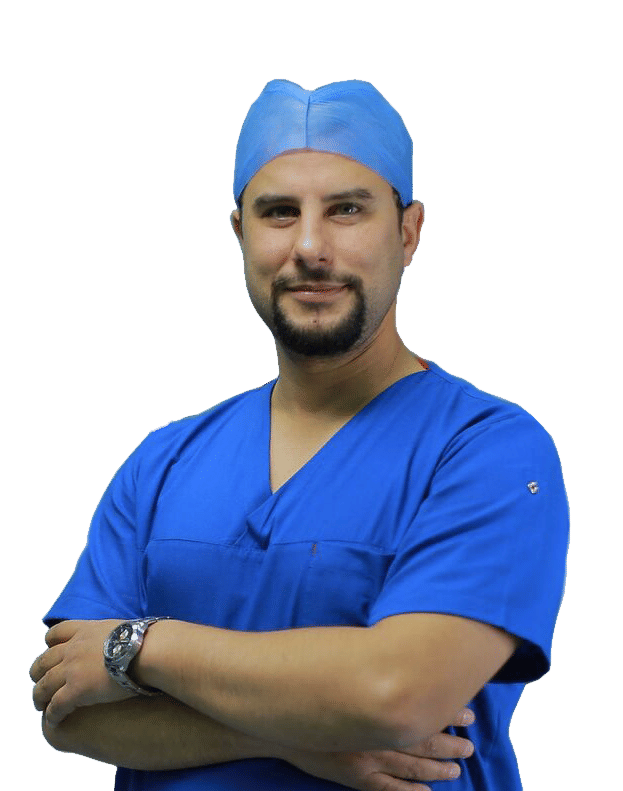
LASIK with Dr. Ahmed Shaarawy, Shaarawy Cornea Clinic

Why choose us

International standard. Regional access.

SMILE Pro: flapless precision

Tiny single incision. Faster recovery, lower dry-eye risk, athletes back to training in days.

Femto LASIK: the dependable workhorse

Femtosecond-laser flap creation. Same-day visual improvement. Suitable for most refractive errors.

Custom PRK for thin corneas

Surface ablation with topography-guided correction. The right call when the cornea is too thin for a flap.

Pre-op screening that catches keratoconus

Topography + tomography (Pentacam, OCT) are part of every LASIK workup. We refuse cases where LASIK is unsafe, and you'll always know why.

Laser vision correction routes

Which of these sounds like you?

Choose the closest description

Your prescription has held steady for a year or more and the Pentacam shows normal corneal thickness.

Femto-LASIK

With enough tissue to work with and numbers that are not moving, this is the direct route. A femtosecond laser lifts the flap, the excimer laser does the correction.

Dry, gritty eyes most days, or a cornea measured near the lower limit with a low to moderate myopic prescription.

SMILE pro

The correction comes out through a small incision, so fewer surface nerves are cut and the front of the cornea stays largely intact. That matters when dryness is already a complaint.

A strong myopic prescription, a cornea too thin to carry the full correction, or a surgeon who has already ruled laser out.

ICL instead of laser

Nothing is removed from the cornea. A lens sits in front of your natural lens, and it can be taken out again if your eyes change later.

This guide points you in a direction. Your corneal scan (Pentacam and topography) and your eye measurements decide which procedure fits.

Book a vision correction consultation

Procedures & pricing

Transparent USD pricing.

Final cost is set after clinical examination. Local-currency equivalents available on request. Insurance reports issued for international patients.

ProcedureBest forFrom (USD)
Femto LASIKCurrent gold standard. Suits most candidates with stable refraction.$600 - $1,100
SMILE ProFlapless. Best for athletes, dry-eye-prone, and dusty environments.$900 - $1,400
Custom PRK / TransPRKSurface ablation. Ideal for thin corneas or military candidates.$500 - $900
Traditional LASIKMild to moderate myopia or hyperopia. Most affordable laser option.$300 - $500

Common questions

Frequently asked.

Is LASIK painful?
No. The procedure uses anesthetic eye drops. You may feel a few seconds of pressure during the suction step, but no sharp pain. Most patients describe it as 'less uncomfortable than a dental cleaning'.
How long is the procedure and recovery?
The laser itself is typically under 60 seconds per eye. The full visit takes 60-90 minutes. With Femto LASIK or SMILE you'll see clearly within 24 hours and return to a desk job the next day. PRK has a 3-7 day visual recovery.
What is your success rate?
Success here means reaching the target uncorrected vision. The honest benchmark is the published one, not ours: across 97 studies and 67,893 eyes, 99.5% of LASIK eyes had uncorrected distance vision better than 20/40 and 1.2% of patients were dissatisfied (Sandoval et al., J Cataract Refract Surg 2016;42(8):1224-1234, PMID 27531300). Those are pooled figures from the world literature, not from this clinic's own patients. Your own result depends on your prescription, astigmatism and corneal thickness, and 20/20 without glasses is the goal, not a guarantee.
Why is LASIK in Cairo cheaper than in the UK or Germany?
Lower clinic operating costs and currency advantages, not lower clinical standards. We use the same Zeiss / Schwind / Wavelight lasers and the same single-use sterile kits as European centers. The savings come from the operating environment, not the surgery itself.
Am I a candidate for LASIK?
Most healthy adults aged 18+ with stable refraction for at least 12 months are candidates. We screen with full topography, pachymetry, and posterior-segment evaluation. If LASIK isn't safe for your cornea, we will recommend ICL, PRK, or SMILE, whichever is right for your eyes.
Can my prescription come back after LASIK?
In most cases the result is permanent. A small drift can appear over 5-10 years, usually from natural age-related changes in your own lens rather than from the laser. A simple enhancement can correct minor regression provided your cornea has enough thickness left. Separately, LASIK corrects distance vision only and does not prevent presbyopia, the natural, age-related loss of near focus that makes reading harder after the mid-40s for almost everyone, including people who have already had LASIK.Presbyopia and reading vision options
What's the difference between LASIK and SMILE Pro?
SMILE Pro is flapless, a small lenticule is removed through a 2-4 mm incision. Less dry eye risk and stronger biomechanical preservation. LASIK uses a corneal flap and offers slightly faster vision recovery and a wider treatment range. Both are FDA-approved gold-standard techniques.Full SMILE Pro details
If I have LASIK now, will I still be able to have a corneal transplant later if I ever need one?
Yes. Prior refractive surgery does not rule out a future corneal transplant. This is a co-authored research paper Dr. Ahmed Shaarawy contributed to, published as a poster at the AAO 2014 Annual Meeting (Terry MA, Straiko MD, Veldman PB, Alshaarawy AM [Dr. Ahmed Shaarawy], Mayko Z, Poster #30039964): DMEK is feasible and beneficial in eyes with prior LASIK or radial keratotomy. That is a conference poster rather than a peer-reviewed article, so it carries no journal, volume, pages or PMID and no figure from it is quoted here. The takeaway for current LASIK patients: should you ever develop endothelial disease (Fuchs dystrophy, post-cataract corneal edema, etc.) decades later, lamellar transplantation, DMEK or DSAEK, remains a sound option.

Send your topography. Get a personalized plan.

Upload your most recent topography (Pentacam / OCT / corneal map) and we'll respond within 24 hours with the right technique, expected outcomes, and the all-in cost.

Medical references

  1. Sandoval HP, Donnenfeld ED, Kohnen T, et al. "Modern laser in situ keratomileusis outcomes." J Cataract Refract Surg. 2016;42(8):1224-1234. PMID: 27531300. 97 studies and 67,893 eyes: 99.5% had uncorrected distance visual acuity better than 20/40, 0.61% lost two or more lines of corrected vision, 1.2% of patients were dissatisfied.
  2. Dr. Ahmed Shaarawy: 20+ years of corneal and refractive surgery, Devers Eye Institute fellowship (Portland, Oregon), two surgical techniques published in the AAO video series. The figures on this page come from the published literature, not from this clinic's own patients.
Contact us on WhatsApp
BookCallWhatsApp