SMILE Pro, also called femto SMILE, is laser vision correction that removes a thin lenticule from inside the cornea through a single 2-4 mm incision, with no corneal flap. It runs on the Zeiss VisuMax 800, the newest SMILE platform, at roughly 8-10 seconds of laser time per eye. It treats myopia up to about -10D and astigmatism up to about 3D, and costs $900 to $1,400 for both eyes in Cairo.
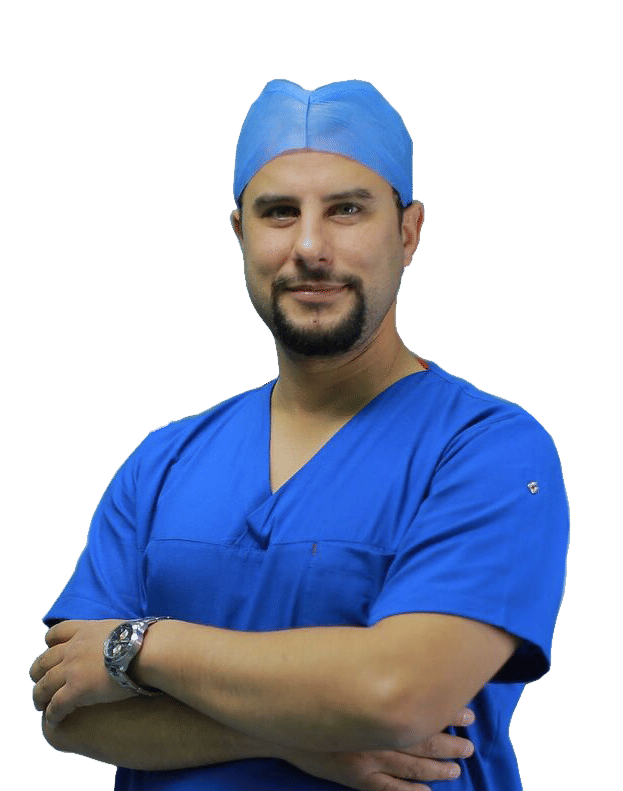
SMILE Pro uses the Zeiss VisuMax 800, the newest generation of SMILE technology, to extract a thin lenticule from within the cornea through a single 2-4 mm incision, without lifting a corneal flap. Laser time is roughly 8-10 seconds per eye, noticeably faster than earlier SMILE platforms. Best suited for myopia (up to about -10D) with or without astigmatism (up to about 3D), especially for athletes and patients in dry or dusty environments. From $900 for both eyes, performed by Dr. Ahmed Shaarawy, a surgeon with two surgical videos in the AAO video library, trained at Devers Eye Institute (Portland, OR).
A single 2-4 mm incision replaces the full flap used in LASIK. The lenticule is extracted through it, preserving more of the cornea's natural biomechanical strength.
Zeiss VisuMax 800: faster laser time
The newest SMILE platform delivers roughly 8-10 seconds of laser time per eye, meaningfully faster than earlier-generation SMILE devices, for a shorter, more comfortable procedure.
Lower dry-eye risk
The smaller incision spares more corneal surface nerves than a LASIK flap, which is associated with a lower rate of post-operative dry eye in published outcomes.
Rigorous pre-op screening
Full topography and tomography (Pentacam) confirm corneal thickness and rule out keratoconus before any SMILE Pro candidacy decision. We decline cases where it isn't safe.
Recovery after SMILE Pro
Day one
Vision is noticeably better. A mild gritty feeling fades within hours. Rest at home.
First week
Back to desk work within 24 to 48 hours. Don't rub your eyes or wear eye makeup.
First month
Vision keeps settling. Light exercise can restart gradually. No swimming yet.
3 months
The result is stable. A follow-up visit checks your final vision.
Compare the options
LASIK, SMILE Pro or ICL: how they differ
Three ways to correct nearsightedness and astigmatism. Two reshape the cornea with a laser. ICL adds a lens inside the eye and leaves the cornea alone. Your scans decide which of them are open to you.
Femto LASIK
How it works
A femtosecond laser cuts a thin flap in the cornea. A second laser reshapes the tissue underneath, then the flap is laid back.
Who it suits
Stable nearsightedness, farsightedness or astigmatism, with a cornea thick enough for a flap.
Recovery
Vision usually clears within 24 to 48 hours. Most people are back at a desk the next day.
Price
$600-$1,100both eyes
Femto LASIK price. Microkeratome LASIK is $300-$500 for both eyes.
SMILE Pro
This page
How it works
The laser shapes a thin disc of tissue inside the cornea and removes it through a 2 to 4 mm opening. No flap.
Who it suits
Nearsightedness up to about -10D and astigmatism up to about 3D. Not used for farsightedness. Often picked by people who play contact sports.
Recovery
Vision usually improves within 24 to 48 hours. The surface heals over one to two weeks.
Price
$900-$1,400both eyes
ICL lens
How it works
A thin lens goes in behind the iris, in front of your own lens. No corneal tissue is removed, and the lens can be taken out later.
Who it suits
High nearsightedness, or a cornea too thin or irregular for laser. Toric ICL corrects astigmatism too.
Recovery
Most people are back to normal activity within a few days. No swimming or contact sport for two weeks.
Price
$1,200-$1,500per eye
EVO ICL: $1,200 per eye
Toric ICL, for astigmatism: $1,500 per eye
Both eyes: $2,400 (EVO) or $3,000 (Toric)
LASIK and SMILE Pro are quoted for both eyes. ICL is quoted per eye. The final plan and price are set after your exam: corneal thickness, topography and a full prescription check.
Final cost is set after clinical examination. Local-currency equivalents available on request. Insurance reports issued for international patients.
Procedure
Best for
From (USD)
SMILE Pro (both eyes)
Flapless lenticule extraction with the Zeiss VisuMax 800. Best for myopia with or without astigmatism, athletes, and dry-eye-prone patients.
$900 - $1,400
Cost calculator
What will SMILE Pro cost you?
Answer a few questions about your prescription and cornea, and the calculator matches a technique and gives a USD estimate for both eyes. The final price is set after your exam.
تجربة مريض حقيقية
Watch a patient four days after SMILE Pro
A patient describes his vision without glasses four days after Femto SMILE Pro, and how long the procedure took. Results vary from case to case.
Common questions
Frequently asked.
What is SMILE Pro?
SMILE Pro is a laser vision correction technique that extracts a thin lenticule from inside the corneal tissue through a single 2-4 mm incision, without lifting a full corneal flap as in LASIK. It's performed on the Zeiss VisuMax 800, the newest SMILE platform, with faster laser delivery and more precise eye tracking than earlier generations.
What's the difference between SMILE Pro and LASIK?
LASIK (Femto LASIK) lifts a thin corneal flap with a femtosecond laser, then reshapes the cornea underneath with an excimer laser. SMILE Pro never lifts a flap, it extracts a lenticule through a small 2-4 mm incision. That preserves more corneal biomechanical strength and is associated with less dry eye, with comparable recovery speed. LASIK still covers a wider prescription range, including hyperopia; SMILE Pro currently treats myopia and astigmatism only.See all 4 laser techniques
Is SMILE Pro painful?
No. Topical anesthetic drops are used before the procedure. You may feel brief, mild pressure during the suction step, but no sharp pain. Mild grittiness or tearing for a few hours afterward is normal and resolves quickly.
Am I a candidate for SMILE Pro?
Good candidates are 18+, have had stable refraction for at least a year, myopia up to roughly -10D, astigmatism up to roughly 3D, and adequate corneal thickness confirmed by Pentacam. Because the incision is smaller than a LASIK flap, some relatively thinner corneas that aren't ideal for LASIK may still be considered for SMILE Pro, but the final decision always rests on the thickness and topography results, not preference alone.
Is SMILE Pro suitable for hyperopia or keratoconus?
No. SMILE Pro is currently approved for myopia and astigmatism only, it is not an option for hyperopia (Femto LASIK is used instead). It is also not suitable for keratoconus or any corneal ectasia risk; topography and tomography (Pentacam) must rule this out before any surgical decision, since operating on an unstable cornea can accelerate disease progression.
How long is the procedure and recovery?
The laser itself takes roughly 8-10 seconds per eye on the VisuMax 800. The full visit, prep, procedure, brief rest, is about 10-15 minutes. Most patients notice improved vision within 24-48 hours and return to desk work in that timeframe. Full surface healing typically takes one to two weeks.
What are the risks and possible complications of SMILE Pro?
SMILE Pro is one of the safest refractive procedures available, but like any surgery it carries risks worth knowing honestly: temporary dry eye (lower than LASIK but still possible in the first weeks), night glare or halos in the early months that usually fade for most patients, and, very rarely, inflammation or delayed healing at the incision. Thorough pre-op screening (corneal thickness, topography, retinal check) minimizes these risks.
Can I get a touch-up (enhancement) after SMILE Pro if my prescription changes?
Yes, but it's more technically involved than after LASIK, since SMILE Pro leaves no flap to simply lift again. In the rare case that an enhancement is needed years later, an alternative technique such as PRK over the treated area is used, decided after careful measurement of remaining corneal thickness.
How much does SMILE Pro cost in Egypt?
SMILE Pro with Dr. Ahmed Shaarawy ranges from $900 to $1,400 USD for both eyes, including the surgeon fee, OR fee, pre-op diagnostics (Pentacam, topography), topical anesthesia, week-1 medications, and the first follow-up visit. Final pricing is confirmed after corneal thickness measurement and refraction.
Is femto SMILE the same thing as SMILE Pro?
Yes, they name the same family of procedures. "Femto SMILE" is the common patient name for SMILE, lenticule extraction through a small incision with no flap. "SMILE Pro" is the name of the newest generation of that same technique, running on the Zeiss VisuMax 800 with a shorter laser time (about 8-10 seconds per eye instead of roughly 23 on older platforms) and more precise tracking and centration. Some patients also call it ReLEx SMILE or SMILE LASIK. The difference between platforms is laser speed and centration accuracy, not a different operation.
What does the Zeiss VisuMax 800 cost per procedure?
Patients searching for a "VisuMax 800 price" are usually asking what the procedure on that platform costs, not what the laser itself costs. Here, SMILE Pro on the VisuMax 800 is $900 to $1,400 for both eyes, including the surgeon fee, OR fee, Pentacam and topography, week-1 medications and the first follow-up. The laser system itself is capital equipment, not something priced per patient, and its cost is already inside that figure. There is no separate technology surcharge.
Is the Zeiss VisuMax 800 different from older SMILE devices?
Yes, the VisuMax 800 is Zeiss's newest SMILE platform, with meaningfully faster laser delivery (roughly 8-10 seconds per eye) than earlier-generation devices, plus a more precise tracking and centration system that shortens total eye exposure under the laser. In practice this means a more comfortable procedure and more precise correction.
Pick a day and time. The first visit is an eye exam with Dr. Ahmed Shaarawy, who tells you which option suits your eyes.
Send your topography. We'll confirm if SMILE Pro is right for you.
Recent topography (Pentacam / OCT / corneal map) plus your refraction is enough for an initial assessment. We'll reply within 24 hours with whether SMILE Pro, Femto LASIK, or PRK is the right technique for your cornea, and the full price.
Reinstein DZ, Archer TJ, Gobbe M. "Small incision lenticule extraction (SMILE) history, fundamentals of a new refractive surgery technique and clinical outcomes." Eye Vis (Lond). 2014;1:3. PMID: 26605350. Review of SMILE against LASIK: comparable visual, refractive and safety outcomes, with a smaller reduction and faster recovery of corneal sensation after SMILE.
Sandoval HP, Donnenfeld ED, Kohnen T, Lindstrom RL, et al. "Modern laser in situ keratomileusis outcomes." J Cataract Refract Surg. 2016;42(8):1224-1234. PMID: 27531300. Pooled across 97 studies and 67,893 eyes: uncorrected distance acuity better than 20/40 in 99.5%, 0.61% lost two or more lines of corrected acuity, and 1.2% of patients were dissatisfied. Quoted here as the LASIK baseline this page compares SMILE against.
Dr. Ahmed Shaarawy: 20+ years of corneal and refractive surgery, Devers Eye Institute fellowship (Portland, Oregon), two surgical techniques in the AAO video library. The figures on this page come from the published literature, not from this clinic's own patients.