Vision problems touch every part of daily life. LASIK surgery can improve vision and reduce your dependence on glasses or contact lenses, or eliminate them altogether. Here we explain what LASIK is, when you might consider it, and the benefits and possible side effects of the procedure.
What Is LASIK?
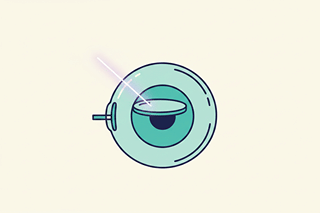
LASIK is the most common laser eye surgery for treating myopia, hyperopia, and astigmatism. It works by reshaping the cornea so that light entering the eye focuses correctly on the retina, producing clearer vision. The procedure is essentially pain-free and takes around 5 minutes for both eyes.
Who Is a Candidate for LASIK?
LASIK is generally performed in patients over 18, because before this age the eye can still be undergoing natural changes. The eye can keep changing after 18 too. That's why your prescription should be stable on examinations for at least one year before laser surgery, sometimes two years or more.
Types of LASIK
LASIK isn't a single procedure. It's a family of techniques, and the surgeon chooses among them based on each patient's case. There are four main types:
1- Surface Laser Ablation (PRK)
PRK is the oldest of the laser refractive procedures. It became less common as newer LASIK techniques developed, but it still has a place in modern practice, particularly when the cornea is too thin or otherwise unsuitable for flap-based LASIK.
Expect some discomfort and light sensitivity for up to about three days afterwards.
PRK is also a common choice for athletes in contact sports and for military personnel exposed to repeated trauma during training.
2- Conventional LASIK
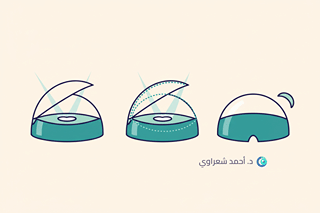
Conventional LASIK reshapes the cornea to correct vision. Using a precise instrument called a microkeratome, the surgeon lifts a thin corneal surface layer (the flap), leaving a section attached to the eye as a hinge. An excimer laser then reshapes the underlying cornea, and the flap is laid back in place to heal. The procedure is straightforward, and patients typically feel only minimal discomfort that resolves quickly.
3- Femto-LASIK
Femto-LASIK is faster and safer than older LASIK techniques, with a quicker, smoother visual recovery.
It is an evolution of earlier LASIK procedures: instead of the sharp microkeratome blade, a femtosecond laser creates the corneal flap.
The flap is lifted to one side, with a hinge left attached to the eye. An excimer laser then reshapes the corneal surface, and the flap is repositioned over the cornea, no bandage contact lens needed.
4- ReLEx SMILE (Femto-SMILE)
SMILE is the most recent and most refined evolution of femto-LASIK. It can correct refractive error even in some patients with thinner corneas, and it does so without lifting a surface flap at all. In a single step, the femtosecond laser carves a thin lenticule of corneal tissue and creates a small incision around 3 mm long. The lenticule is then extracted through that small opening, leaving the corneal surface intact. The whole procedure takes about 10 minutes.
At Cornea Clinic, this procedure is performed by one of Egypt's leading refractive surgeons, Dr. Ahmed Shaarawy.
Why Dr. Ahmed Shaarawy Is a Top Choice for LASIK
Dr. Ahmed Shaarawy is a lecturer and consultant in cornea and refractive surgery at the Research Institute of Ophthalmology. He holds a doctorate (MD) in ophthalmology and fellowship in corneal surgery from the Devers Eye Institute in Oregon, USA, where he trained under leading American eye surgeons. He was the first surgeon in Egypt to perform endothelial keratoplasty (DSAEK) using the S-stamp technique, a technique he has since taught to many ophthalmologists and presented at numerous conferences in the United States and the Arab world. With a long record of successful operations and consistent use of the latest surgical techniques, Dr. Shaarawy is regarded as one of Egypt's most prominent eye surgeons.
Benefits of LASIK
1- Minimal pain, thanks to the topical anaesthetic drops used.
2- Vision is corrected almost immediately or within the day after the procedure.
3- No bandages or sutures are required after LASIK.
4- Enhancements can be performed years later if your vision changes with age.
5- Most patients see a substantial reduction in their dependence on glasses or contact lenses, many no longer need them at all.
Possible Side Effects of LASIK
The most common side effects patients experience after LASIK include:
- Soreness.
- Discomfort.
- Dry eye.
- Itchiness.
- Light sensitivity.
- Glare.
- Halos around lights.
- Starbursts.
- Blurred vision.
These symptoms typically fade with appropriate follow-up under your surgeon's care. Your eyes are the windows through which you see the world, don't hesitate to take a step like LASIK that can give you greater visual freedom and a better quality of life.
Sources and references
Peer reviewed and professional sources used in the medical review of this article:
- What are the risks and how can I find the right doctor for me?U.S. FDA · fda.gov
- Validation of the Ectasia Risk Score System for preoperative LASIK screeningRandleman et al., 2008 · Am J Ophthalmol
- Modern laser in situ keratomileusis outcomesSandoval et al., 2016 · J Cataract Refract Surg