Everything You Need to Know About LASIK Surgery
What Is LASIK?
LASIK is a laser-assisted refractive eye procedure, and the most common surgical option for correcting myopia, hyperopia, and astigmatism.
The name stands for laser-assisted in situ keratomileusis. During the procedure, a laser reshapes the cornea so that incoming light focuses precisely on the retina. That is the whole principle behind every refractive surgery: change the shape, sharpen the focus, and vision clears.
LASIK for the Eyes
LASIK is painless and takes about 5 minutes for both eyes.
It is not the ideal option for everyone, though. In some cases other refractive procedures are recommended instead, surface laser ablation (PRK) or implantable collamer lenses (phakic ICL).
Dr. Shaarawy will discuss the most appropriate procedure for your case during your consultation.
How Soon Does Vision Return to Normal After LASIK?
You will notice results immediately after surgery. Vision improves without glasses or contact lenses and continues to sharpen and stabilise over the next several days.
How LASIK Is Performed
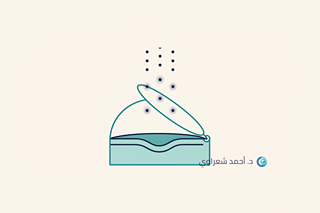
LASIK procedure
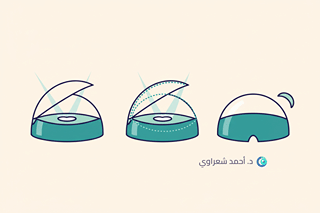
Before anything begins, anaesthetic eye drops are placed to keep you comfortable, and your doctor may give you a mild medication to help you relax. You are then positioned under the laser, and a lid speculum keeps the eyelids open.
The surgeon places an ink mark on the cornea before lifting the flap. A very thin, superficial corneal flap is created using a small surgical instrument called a microkeratome, or, more commonly today, a femtosecond laser. During this step a suction ring sits on the front of the eye to keep it stable.
The surgeon lifts the flap and uses an excimer laser to remove a precise amount of corneal tissue based on your prescription, whether that is myopia, hyperopia, or astigmatism.
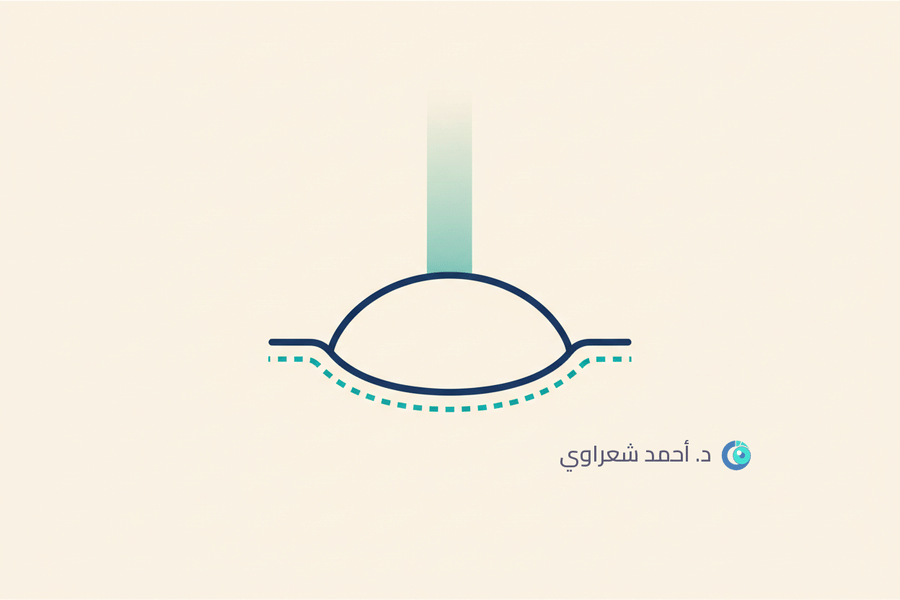
The excimer laser produces a cool ultraviolet beam that removes microscopic amounts of tissue, reshaping the cornea so incoming light lands more accurately on the retina.
You will be asked to look at a fixation light briefly while the surgeon monitors your eye through a microscope. The reshaping itself is painless, though you may feel some pressure on the eye and hear a steady clicking sound while the laser fires. LASIK is performed on each eye separately, and together they take about five minutes.
For myopia, LASIK flattens the cornea; for hyperopia, it makes the cornea steeper.
Once reshaping is complete, the flap is simply repositioned. LASIK needs only topical anaesthetic drops, no patches, no stitches.
The excimer laser also corrects astigmatism by smoothing an irregular cornea into a more uniform shape.
Before LASIK
Before the procedure, Dr. Shaarawy performs a comprehensive eye examination to confirm your eyes are healthy enough for surgery. The evaluation covers:
- Corneal shape and thickness
- Pupil size
- Refractive error (myopia, hyperopia, astigmatism)
- Tear film on the ocular surface
If your tear film looks borderline, the surgeon may recommend a preventative treatment to lower the risk of post-LASIK dry eye.
An automated device called a corneal topographer or Pentacam measures the curvature of the front of the eye and builds a detailed map of your cornea.
In addition:
- You will likely undergo a wavefront analysis, which sends light waves through the eye to map subtle aberrations affecting your vision.
- Dr. Shaarawy will also review your general health and any medications you take to determine whether you are a suitable candidate for LASIK.
One practical note: stop wearing contact lenses for a period of time (usually about two weeks) before the eye exam and the procedure. Contact lens wear can temporarily alter the shape of the cornea, which would skew the measurements.
After LASIK
Right after surgery you will be asked to rest for a while. Some itching or burning is normal. Vision is often blurry immediately after the procedure but typically clears by the following morning.
Can I drive myself home? Not yet. At your first post-op visit, visual acuity is measured to confirm it is safe to drive without glasses or contact lenses.
In most cases that means a visual acuity of 6/12 or better, as with any refractive procedure.
Until your doctor confirms at the follow-up visit that your vision meets the legal and safety standards, driving stays off the table.
Vision improves over a few days; in rare cases the process can take weeks or longer.
You can return to most normal activities right away, though some surgeons recommend at least one day of rest.
Strenuous exercise should wait at least a week, as it can affect healing. And avoid rubbing the eye, there is a small chance of dislodging the corneal flap.
LASIK procedure
Long-Term Results of LASIK
LASIK can dramatically improve quality of life. Most patients achieve 6/6 vision or better, though results vary.
In some cases you may still need glasses or contact lenses after laser correction, though typically with a much weaker prescription than before.
If a small residual refractive error remains and you want sharper vision for tasks such as night driving, prescription lenses with anti-reflective coating can help.
And if you become more sensitive to sunlight after LASIK, photochromic lenses can reduce glare and make vision more comfortable.
Risks and Side Effects of LASIK
LASIK has an excellent safety profile, but there are side effects and complications worth knowing about:
- Night-time glare and halos around lights
- In a small minority of cases, an enhancement procedure may be needed
several months after the initial LASIK to fine-tune the result.
- You may still need reading glasses by your forties due to age-related near-vision loss (presbyopia).
While LASIK has a high success rate, it is important to discuss any concerns with Dr. Shaarawy before consenting to the procedure.
Sources and references
Peer reviewed and professional sources used in the medical review of this article:
- LASIK: Laser Eye SurgeryAAO EyeSmart, 2026 · aao.org
- LASIK (patient information hub)U.S. FDA · fda.gov
- Modern laser in situ keratomileusis outcomesSandoval et al., 2016 · J Cataract Refract Surg