Femto SMILE corrects refractive errors, myopia, hyperopia, and astigmatism. Vision correction has never been more refined than with this technique, and the procedure is performed at Cornea Clinic under the care of Dr. Shaarawy.
SMILE is one of the newer refractive eye surgeries to emerge in recent years, and it sits within the broader family of LASIK procedures. This article walks through what SMILE is, how it is performed, how it compares to other LASIK techniques, and where its advantages and limits lie.
How the SMILE Procedure Works
Step by Step Through SMILE Surgery
A SMILE procedure typically takes about 10 minutes. That short operating time is the modern femtosecond technology doing its job, surgical impact stays minimal, which is why SMILE ranks among the safest refractive procedures available.
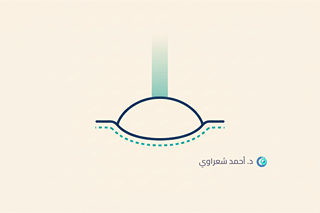
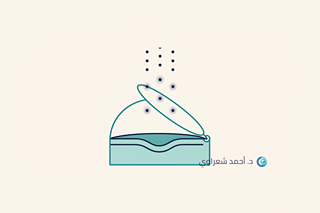
During SMILE, a small lenticule is created inside the cornea using the VisuMax femtosecond laser, then removed through a tiny incision to correct the refractive error. Here is how it goes:
- Dr. Shaarawy applies anaesthetic eye drops, then opens the eye with a lid speculum. A thin lenticule is shaped within the corneal stroma and accessed through a small opening of about 2.5 mm.
- Based on your corneal map, the femtosecond laser shapes the lenticule precisely to correct the refractive error.
Advantages of SMILE
SMILE delivers strong visual outcomes for myopia and astigmatism, comparable to traditional LASIK.
The biggest advantage is corneal preservation. Only a small 2.5 mm incision is made, which spares more of the cornea and most of its nerves.
Recovery is quick. Most patients are back to normal activities within a couple of days, and the procedure itself is typically painless, both during and after surgery.
SMILE can also correct higher degrees of refractive error.
Post-operative dryness tends to be milder and pass sooner than after standard LASIK.
In our clinic, SMILE is often the choice we recommend for people whose work or sport involves contact and impact, footballers, combat athletes, and others, because the corneal surface stays more stable than after LASIK.
Limitations of SMILE
Advanced technology or not, SMILE has consistently shown stronger results in myopia than in hyperopia.
It is also generally less suitable for very mild myopia, below the moderate-to-high range the platform targets. Recovery in those lower-power eyes can be slower than with standard LASIK, sometimes taking three weeks or more for vision to settle.
To find out whether SMILE is right for you, please book a consultation with Dr. Shaarawy for a full corneal evaluation.
For the full procedure detail on femto SMILE with the Zeiss VisuMax 800, candidacy and corneal thickness, current pricing, and the recovery timeline, see the SMILE Pro (femto SMILE) page.
Sources and references
Peer reviewed and professional sources used in the medical review of this article:
- SMILE versus FS-LASIK for Myopia: A Systematic Review and Meta-AnalysisShen et al., 2016 · PLoS One
- Clinical outcomes of SMILE versus FS-LASIK for myopia: a meta-analysisYan et al., 2017 · Int J Ophthalmol
- LASIK: Laser Eye SurgeryAAO EyeSmart, 2026 · aao.org