
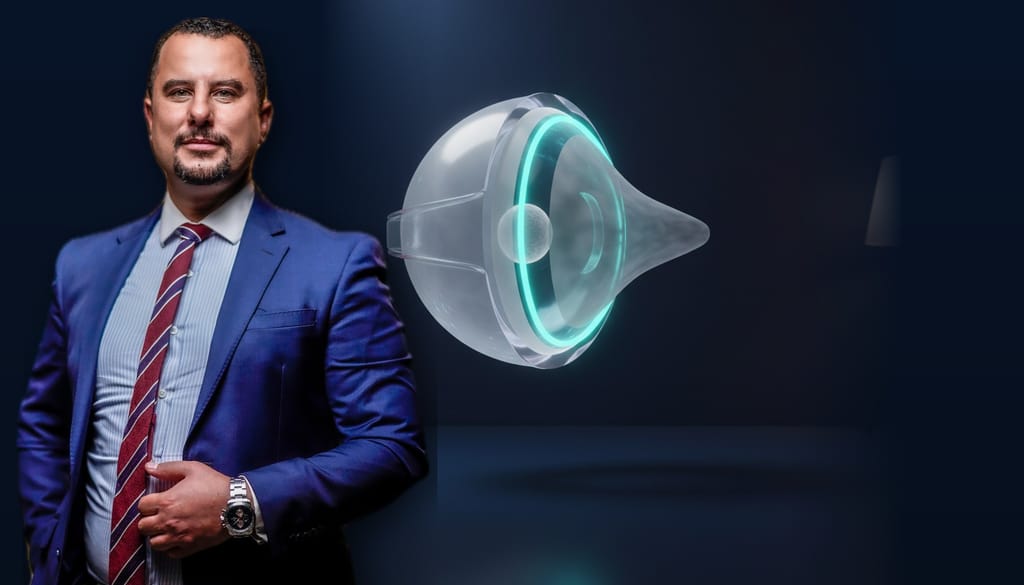
Corneal Transplant by Dr. Shaarawy
US-trained corneal specialist · 20+ years in corneal surgery · Cairo referral center
A corneal transplant (keratoplasty) is a surgical procedure that replaces damaged corneal tissue with healthy donor tissue to restore vision, treating corneal scarring, endothelial failure such as Fuchs dystrophy, and advanced keratoconus.
DMEK, DSAEK, DALK & PK, all techniques under one roof · cost from $2,500-$4,500
Book your consultation
Select a date and time, Dr. Shaarawy will review your scans and recommend the right procedure.
Which transplant do I need?
The right procedure depends on which corneal layers are affected. Dr. Shaarawy will confirm after examining your scans.
DMEK
زراعة القرنية البطانية
Thinnest graft available, fastest visual recovery for Fuchs dystrophy and endothelial failure.
Learn more →ReliableDSAEK
زراعة القرنية البطانية الجزئية
Larger donor disc with excellent outcomes, the established standard for endothelial disease.
Learn more →Full corneaPK / PKP
زراعة القرنية الكاملة
Full-thickness corneal replacement, indicated for advanced scars, keratoconus, and stromal disease.
Learn more →Corneal transplant cost estimate
See procedure pricing and get a personalized estimate on our dedicated cost page.
Cost calculator
Get your corneal transplant cost estimate

Why choose Dr. Ahmed Shaarawy?
Lecturer at the Research Institute of Ophthalmology and Corneal Surgery Consultant. Cornea clinical & research fellow at Devers Eye Institute, Portland, Oregon (under Prof. Mark Terry). First surgeon to perform S-DMEK in Egypt and the Arab world. Published novel DMEK and DALK techniques at the American Academy of Ophthalmology.
+20
years
of corneal surgery experience
🇺🇸
Devers
Cornea Fellowship, Oregon, USA
+5,000
procedures
from Dr. Shaarawy's own operative record, 20+ years
AAO
published
Smart Splash & Graft Exchange DALK techniques
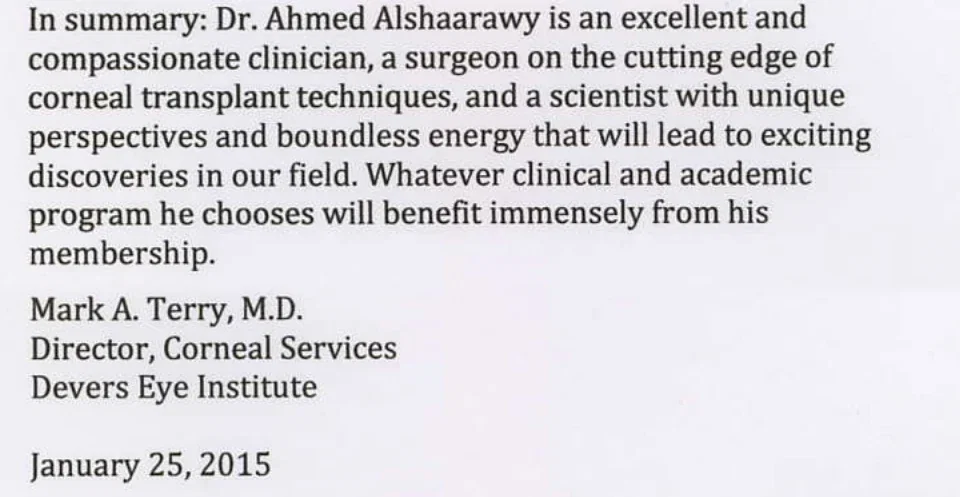
Letter of recommendation
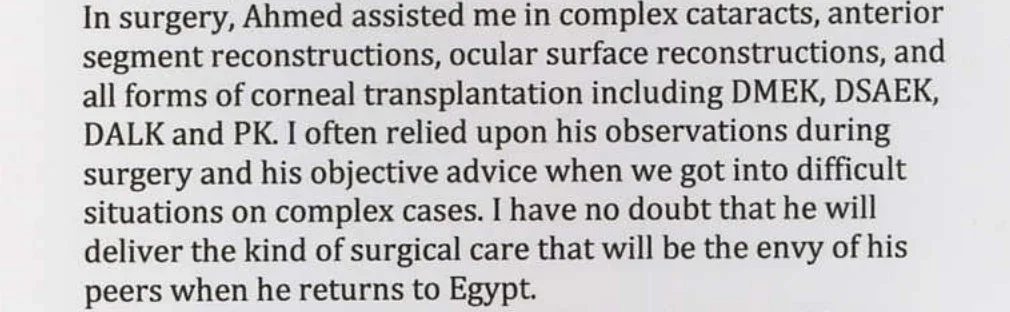
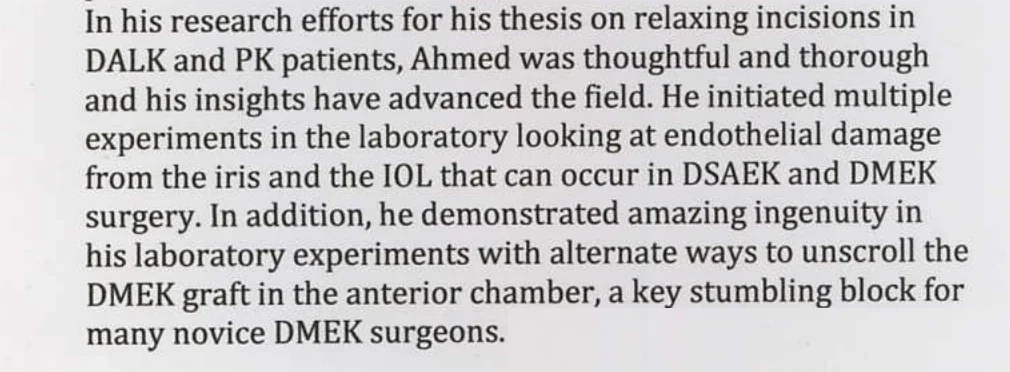
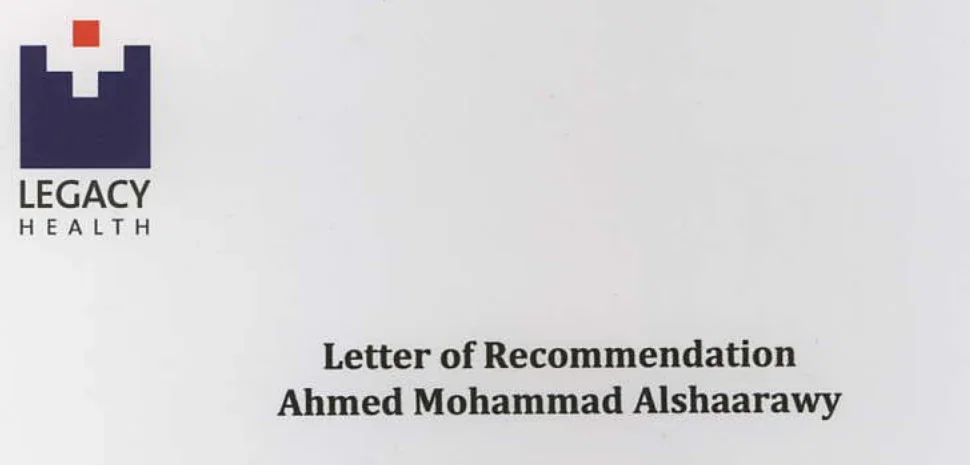
In Prof. Mark Terry's own words
Excerpts from the letter Prof. Mark A. Terry, Director of Corneal Services at the Devers Eye Institute, wrote for Dr. Shaarawy on 25 January 2015, at the end of his time in Portland.
Tripoli, March 2022
Libya's national corneal transplant programme
Visiting surgeon for the programme the Libyan Ministry of Health launched at Tripoli University Hospital: about 20 corneal transplants in one week, restarting the surgery there after a pause of nearly eight years.
The full story and sources+25
patient countries
4.9/5
patient rating
120+ reviews across Google, Meta, Vezeeta and Endorsal · August 2026
Watch a real patient's experience with Dr. Ahmed Shaarawy
A real patient talks through the whole thing, from diagnosis to restored vision after DMEK corneal transplantation.
A full corneal transplant after years of delaying surgery
A patient from Al-Arish, fifteen days after a full-thickness corneal transplant for keratoconus. He put off surgery for years, until a partial transplant was no longer possible, and Dr. Ahmed Shaarawy explains why deciding early can avoid a full transplant.
"I was afraid the night before the operation, I was hesitant too, at my age."
A patient from Saudi Arabia after a repeat full-thickness transplant
A patient from Saudi Arabia who works in the medical field. A full-thickness transplant done elsewhere had failed, so Dr. Ahmed Shaarawy repeated it. About six months on, with the stitches still in, his vision with glasses is 6/9 and his astigmatism only 3 diopters.
"Thank God, it was really excellent, and I felt reassured from the first step to the last."
A patient from Bahrain after a first transplant failed
Jamal, from Bahrain, two weeks after a repeat full-thickness corneal transplant, after more than eighteen years of corneal disease and a first operation that failed.
"I was afraid and hesitant, because the old transplant had left me frustrated and hopeless."
What happens, step by step
Consultation & Imaging
Comprehensive slit-lamp exam, corneal topography (Pentacam), endothelial cell count, and anterior segment OCT. We confirm the diagnosis and choose the right procedure for you.
Pre-operative Planning
Donor tissue is ordered from an accredited eye bank. Systemic health is optimized. You receive detailed written instructions for the day of surgery.
Surgery
Performed under local or general anesthesia. DMEK/DSAEK: typically 10-30 minutes. PK: 20-30 minutes. DALK: 30-40 minutes. You go home the same day or the next morning.
Week 1 Recovery
Face-down positioning (DMEK/DSAEK) for the first 24-48 hours helps graft adherence. Anti-rejection drops begin immediately. Vision is blurry but improving.
Long-term Follow-up
Visits at 1 week, 1 month, 3 months, 6 months, then annually. Final vision typically stabilizes by 3-6 months. Lifelong anti-rejection drops required.
Patient experiences
S.M.
Saudi Arabia · DMEK
“After years of blurry vision from Fuchs dystrophy, DMEK gave me 20/25 vision within three months. Dr. Shaarawy's team was professional throughout.”
K.A.
Iraq · PK
“Advanced keratoconus had taken my vision to counting fingers. Six months post-PK I'm reading without glasses again. Life-changing surgery.”
R.E.
Egypt · DSAEK
“I traveled to Cairo specifically for Dr. Shaarawy after reading about his DMEK experience. The outcome exceeded every expectation.”
Initials only, full names withheld for patient privacy.
Frequently asked questions
Everything you need to know before deciding on corneal transplant surgery
How long does corneal transplant surgery take?
What is the success rate for corneal transplant?
How long is the recovery period?
Will I need to take drops for life?
What is the risk of rejection?
Does insurance cover corneal transplant in Egypt?
Can I travel back home after surgery?
What is the cost of corneal transplant in Cairo?
How do I know which transplant I need, DMEK, DSAEK, or PK?
What is Dr. Shaarawy's experience with DMEK?
Ready to restore your vision?
Book a consultation with Dr. Shaarawy: your scans determine the right procedure and timeline
Medical References
- Price MO, Giebel AW, Fairchild KM, Price FW Jr. "Descemet's membrane endothelial keratoplasty: prospective multicenter study of visual and refractive outcomes and endothelial survival." Ophthalmology. 2009;116(12):2361-2368 (PMID 19875170).
- Gain P, Jullienne R, He Z, Aldossary M, et al. "Global Survey of Corneal Transplantation and Eye Banking." JAMA Ophthalmol. 2016;134(2):167-173 (PMID 26633035).
- Deng SX, Lee WB, Hammersmith KM, Kuo AN, et al. "Descemet Membrane Endothelial Keratoplasty: Safety and Outcomes: A Report by the American Academy of Ophthalmology." Ophthalmology. 2018;125(2):295-310 (PMID 28923499). Mean BCVA after DMEK ranged from 20/21 to 20/31, immune rejection averaged 1.9% (range 0-5.9%), and graft survival ranged from 92% to 100% at last follow-up.
- Hos D, Tuac O, Schaub F, Stanzel TP, et al. "Incidence and Clinical Course of Immune Reactions after Descemet Membrane Endothelial Keratoplasty: Retrospective Analysis of 1000 Consecutive Eyes." Ophthalmology. 2017;124(4):512-518 (PMID 28094043). Probability of an immune reaction was 2.3% at four years.
- Dr. Ahmed Shaarawy: 20+ years in corneal surgery, Devers Eye Institute fellowship (Portland, Oregon), and two surgical techniques published in the AAO video series.