Cataract Surgery, From Diagnosis to Full Recovery
Last week I operated on a 72-year-old woman from Fayoum. She'd told me she hadn't been able to see her grandson's face clearly in two years. One day after surgery, she said to me, in tears: "I can see again, doctor." Moments like that are why I love this job, and they happen every single week with cataract patients.
Cataracts are one of the most common eye conditions in the world and the leading cause of treatable blindness, and cataract surgery is one of the most successful procedures in all of medicine. In this article, I'll walk you through everything you need to know if you or someone close to you needs the surgery.
What Exactly Is a Cataract?
Inside your eye is a clear, natural lens that focuses light onto the retina. When the proteins in that lens break down and clump together, which happens naturally with age or due to other factors, the lens becomes cloudy and light no longer passes through the way it used to. That's a cataract.
It's worth knowing that cataracts are different from glaucoma: a cataract is clouding of the lens; glaucoma is elevated eye pressure.
Main Symptoms
- Blurred vision, like looking through a dirty pane of glass
- Halos around lights at night and difficulty driving
- Double vision in one eye
- Frequent changes to your glasses prescription
- Fading colors, whites can look yellowish
- "Second sight" phenomenon, a temporary improvement in near vision in the early stages, which fades later
Diagnosis, What Happens During the Exam?
At the Dokki clinic, I run three core tests:
- Visual acuity measurement, to see exactly where your vision stands
- Slit lamp exam, I examine the lens under magnification and determine the type and degree of clouding
- Retina and eye pressure check, to rule out any other issues
When Do You Need the Surgery?
There's no specific number or stage where we say "now you must operate." The rule is simple: once the cataract starts affecting your daily life, reading, driving, work, recognizing people's faces, that's when we talk about surgery.
What I Tell My Patients
"Don't wait for the cataract to 'ripen', that's outdated advice, and it's risky. The harder the lens gets, the harder the surgery becomes and the higher the risk of complications. With phaco today, the surgery is simple and quick when it's done at the right time."
The Surgery, Available Techniques
Phacoemulsification (Phaco), the Standard Technique
This is the method I use in most cases:
- A small incision, about 2 to 2.8 mm
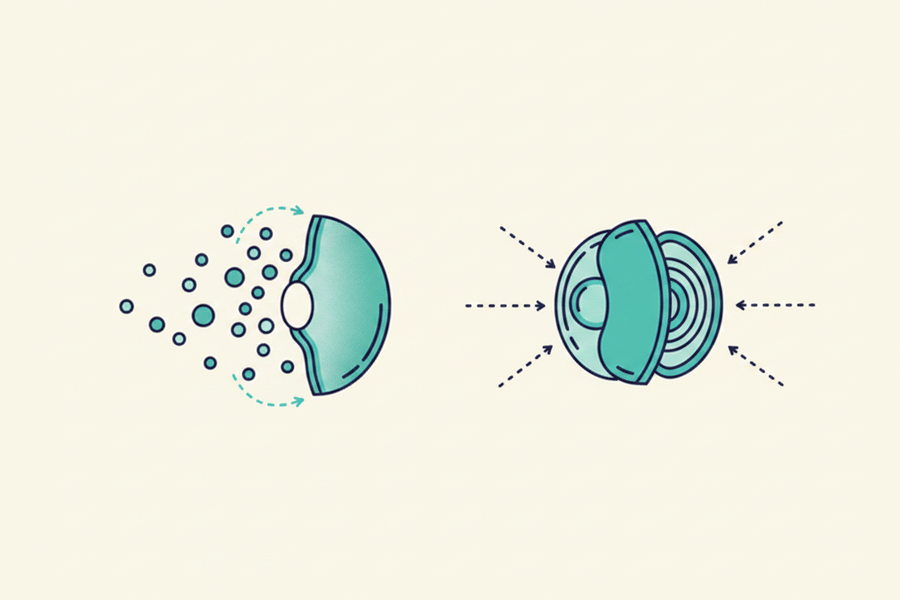
- Ultrasound waves break up the cloudy lens and suction it out
- A foldable artificial lens is implanted through the same incision
- No stitches in most cases
Femtosecond Laser, For Cases That Need Exceptional Precision
Femtosecond laser creates incisions with extremely high precision. I use it especially with multifocal or toric lenses (for correcting astigmatism), because alignment needs to be accurate down to the micron.
Types of Implanted Lenses, and How They Affect Cost
Choosing the lens is the single most important decision in the surgery, because it shapes your visual life afterward:
- Monofocal, excellent vision at one distance (usually far). You'll need reading glasses. The lowest cost and most common option.
- Multifocal / EDOF, gives you vision at multiple distances and reduces your reliance on glasses. Suited to active people who don't want to wear glasses. Higher cost.
- Toric, corrects the cataract and astigmatism at the same time. Important if you have noticeable astigmatism.
Cost in Egypt
Cataract surgery costs range between EGP 15,000 and 35,000 per eye, depending on the type of lens implanted. Monofocal lenses fall on the lower end, and multifocal or toric lenses on the higher end. For a more precise estimate for your case, try the cataract cost calculator.
Surgery Day, What Exactly Happens
General anesthesia isn't usually needed, local drops numb the eye completely. The surgery takes about 10 minutes, and you go home from the clinic the same day.
Most patients notice improved vision the same day or the day after. Vision fully stabilizes within 4 to 8 weeks.
Post-Surgery Instructions
- Don't rub or press on your eye
- Avoid swimming and getting water in the eye for a few weeks
- Wear the protective eye shield at night for the first few weeks
- Don't lift heavy objects or bend over forcefully
- Keep your follow-up appointments and use your drops as prescribed
Can Cataracts Come Back?
No. The natural lens has been permanently removed and won't return. However, some patients develop clouding of the membrane behind the new lens (after-cataract / posterior capsule opacification, PCO), which is treated with a simple, painless YAG laser session that takes just minutes.
The Bottom Line
Cataracts are treatable with a very high success rate. Don't accept blurry vision as just a normal part of aging. If you notice any change in your vision, book an exam and let's take a look. The consultation costs EGP 1,500, and early diagnosis makes a real difference in how straightforward the surgery is and how good the outcome will be.
Sources and references
Peer reviewed and professional sources used in the medical review of this article:
- What Are Cataracts?AAO EyeSmart · aao.org
- Cataracts (Seminar)Cicinelli et al., 2023 · The Lancet
- Cataracts (Seminar)Liu et al., 2017 · The Lancet