Astigmatism: Symptoms and Treatment Options
Astigmatism is one of the most common refractive errors of the eye. Almost everyone has some degree of it, at its core, it is an irregular curvature of the eye's optical surfaces that blurs vision.
The good news? Astigmatism is straightforward to manage. This article explains the symptoms and the treatment options available.
What Is Astigmatism?
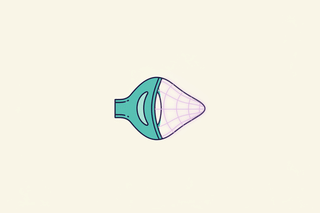
Astigmatism occurs when the cornea, or the lens inside the eye, has uneven curvatures. Instead of being shaped like a perfectly round ball, the cornea looks more like a rugby ball or oval. That irregular curvature blurs vision at all distances, and it may coexist with myopia (nearsightedness) or hyperopia (farsightedness).
Astigmatism is often present from birth, and a patient may have it alongside myopia or hyperopia. When it is high enough to interfere with daily life, the best treatments are toric corrective lenses or refractive laser surgery to reshape the cornea, typically LASIK.
Symptoms of Astigmatism
Common symptoms include:
- Blurred or distorted vision
- Eye strain or visual discomfort
- Headaches
- Difficulty with night vision
- Squinting to see clearly
Causes of Astigmatism
The exact cause is not fully understood, though genetics plays a strong role. Beyond that, the eye contains two structures with curved surfaces that bend (refract) incoming light onto the retina, producing the images we see. They are:
The Cornea
The clear front surface of the eye.
The Lens
A clear structure inside the eye that changes shape to focus on near objects.
In a perfectly shaped eye without astigmatism, both of these elements have a smooth, spherical curvature.
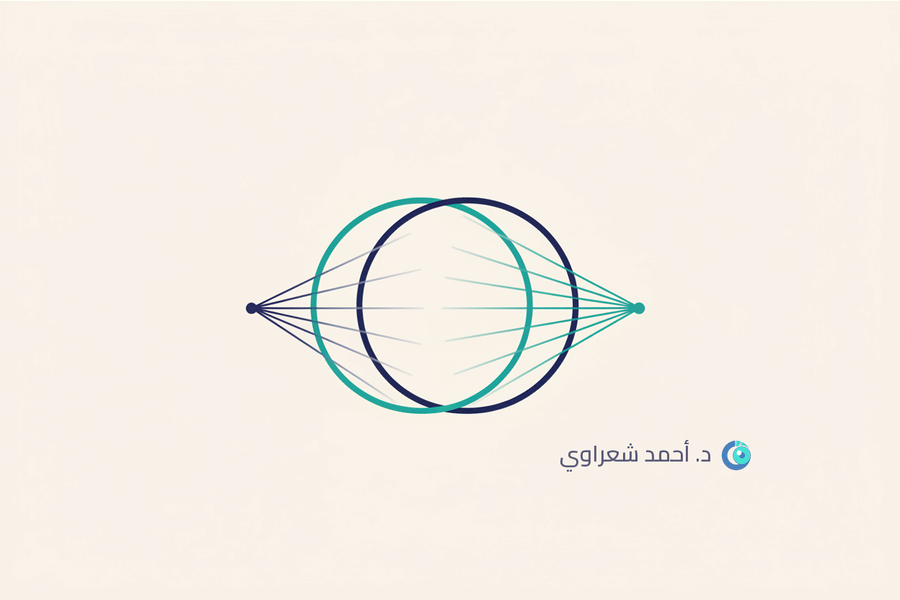
If either is shaped more like an oval, light rays do not bend as they should. The eye produces two slightly different images that overlap, and vision blurs, which is why astigmatism is classified as a refractive error.
Treating Astigmatism in Children
"Does astigmatism improve in children?" This is one of the questions we hear most. Before answering, keep in mind that children may not realize their vision is blurry. They should have routine eye exams from a pediatric ophthalmologist starting at birth, and once they reach school age, every one to two years.
Treatment for astigmatism in children (under 18 years) is usually with corrective lenses, which compensate for the refractive error.
In adults, astigmatism can be managed two main ways: corrective lenses, or LASIK refractive surgery.
Visit Cornea Clinic and book an appointment with Dr. Shaarawy if your symptoms are limiting your daily activities or affecting how you see and work. Your ophthalmologist can confirm whether you have astigmatism, measure its severity, and walk you through the best correction options for your eyes.
Sources and references
Peer reviewed and professional sources used in the medical review of this article:
- AstigmatismNational Eye Institute, 2024 · nei.nih.gov
- Astigmatism Explained: Causes, Diagnosis, TreatmentAAO EyeSmart · aao.org
- A review of astigmatism and its possible genesisRead et al., 2007 · Clin Exp Optometry