
Stem cell transplant: vision after the limbus is destroyed.
Limbal stem cells (at the edge of the cornea) constantly regenerate the corneal surface. When destroyed by chemical burns, severe scarring, or aniridia syndrome, the cornea opacifies and a transplant won't last without first restoring the stem cell population. CLET (cultivated) and SLET (simple limbal epithelial transplantation) bring the surface back to life.
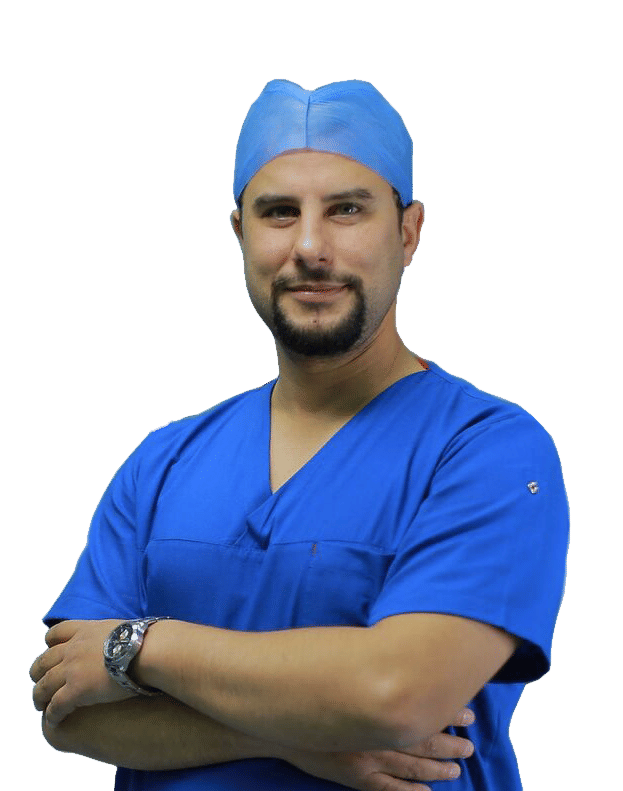
Why choose us
International standard. Regional access.
One of few regional centers performing CLET
Cultivated Limbal Epithelial Transplantation requires a specialized lab. Few centers in the Arab region perform it; we run the protocol in collaboration with a tissue lab in Cairo.
SLET in a single OR session
The SLET technique (Sangwan, India 2012) gives a CLET-like result without the lab, small biopsy from your healthy eye, distributed onto a bandage contact lens, glued to the affected eye.
Right candidate selection
Stem cell transplant only works after detailed evaluation. We screen with impression cytology, anterior segment OCT, and detailed history before committing.
Two-stage rehabilitation when needed
Severe cases need stem cell transplant first, then corneal transplant 6-12 months later once the surface is healed. We plan the full sequence upfront.
Procedures & pricing
Transparent USD pricing.
Final cost is set after clinical examination. Local-currency equivalents available on request. Insurance reports issued for international patients.
| Procedure | Best for | From (USD) |
|---|---|---|
| SLET (Simple Limbal Epithelial Transplantation) | Single-step, autologous, no lab | $2,000 - $3,500 |
| CLET (Cultivated Limbal Epithelial Transplantation) | Lab-cultured, larger area coverage | $2,500 - $4,000 |
| Combined CLET + later corneal transplant | Two-stage rehab for severe cases | $5,500 - $8,500 |
Watch a real patient's experience with Dr. Ahmed Shaarawy
A real patient tells the whole story, from diagnosis to corneal renewal after ocular stem-cell transplantation.
Common questions
Frequently asked.
Who is a candidate?
How is SLET different from CLET?
What if both eyes are affected?
What's the success rate?
Chemical burn or LSCD case? Send the details.
Stem cell candidacy requires careful evaluation, send your full ocular history, recent OCT and impression cytology if available, and photos of the eye. We'll respond within 24 hours with whether SLET / CLET / keratoprosthesis is the right path and the all-in cost.
Medical references
- Sangwan VS, Basu S, MacNeil S, Balasubramanian D (PMID 22328817). "Simple limbal epithelial transplantation (SLET): a novel surgical technique for the treatment of unilateral limbal stem cell deficiency." Br J Ophthalmol. 2012;96(7):931-934.
- Dr. Ahmed Shaarawy: 20+ years of corneal and refractive surgery, Devers Eye Institute fellowship (Portland, Oregon), two surgical techniques published in the AAO video series. The figures on this page come from the published literature, not from this clinic's own patients.