
أثر الذكاء الاصطناعي على طب العيون
نص الفيديو
طب بما إنك جبت سيرة التكنولوجي وأحدث الصيحات، إحنا ما بنسمعش عن حاجة اليومين دول أكتر من الـ AI وتدخل الذكاء الاصطناعي في العمليات وفي الطب عموما، واستخدامات الطب للذكاء الاصطناعي. ممكن أعرف شايفها إزاي؟ وإلى أي مدى إحنا وصلنا فين دلوقتي؟
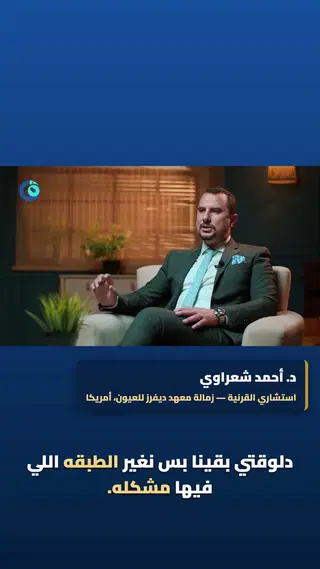
طبعا أنا لما بشوف اللي بيعمله الذكاء الاصطناعي في كل حاجة أنا نفسي بترعب، اللي هو إيه ده؟ إزاي؟ فده طبعا جه عندنا في العيون، بس لحد دلوقتي مدخلش جوه الـ surgery، هو دخل في التشخيص. يعني بعض الصور بتاعة الأشعات، الذكاء الاصطناعي بيقدر ياخد صور لمرضى ويتابعهم ويدي recommendation: لا، أنا شايف إن دي abnormal، ودي normal. طبعا داخل معانا في جزء التشخيص بس، لحد دلوقتي مدخلش معانا في جزء العلاج.
يمكن دخل في جزء الـ LASIK مثلا، زي الـ tracker مثلا. لأن جزء من عمليات الـ LASIK إن المريض لو حرك عينه وإحنا بنعمل شعاع الليزر، إيه اللي ممكن يحصل؟ هل الليزر نازل في الـ point دي والمريض حرك؟ طب إيه اللي بيحصل؟ ساعتها بقى بيدخل computer system، إن هو حتى لو المريض حرك عينه، شعاع الليزر بيجري وراه.
ده جزء من الذكاء الاصطناعي برضه، إنه قدر يتغلب على صعوبة حركة العين أثناء عمل الليزر. هو داخل بس مش in depth.
هذا النص مُستخرج تلقائياً من الفيديو وقد يحتوي على أخطاء لغوية.
نص الفيديو بلغات أخرى
English
Well, since you brought up technology and the latest trends, there is nothing we hear about these days more than AI, and artificial intelligence getting into surgeries and into medicine in general, and how medicine uses artificial intelligence. Can I ask how you see it? And how far have we actually gotten now?
Honestly, when I see what artificial intelligence is doing in everything, I get scared myself: what is this? How? So of course it came to us in ophthalmology, but so far it has not gone inside the surgery itself, it has entered diagnosis. I mean, some of the imaging scans: artificial intelligence can take images of patients, follow them up and give a recommendation, like, no, I think this one is abnormal, and this one is normal. Of course it is in with us in the diagnosis part only, so far it has not come in with us in the treatment part.
Maybe it has entered the LASIK part, for example, something like the tracker. Because part of LASIK surgery is this: if the patient moves his eye while we are applying the laser beam, what could happen? The laser is going down on this point and the patient moved, so what happens? At that point a computer system comes in, so that even if the patient moves his eye, the laser beam runs after it.
That is part of artificial intelligence too, that it managed to overcome the difficulty of eye movement during the laser. It is in, but not in depth.
Auto-generated from the video audio and translated from the Arabic, may contain errors.
中文
既然您提到了技术和最新的潮流,这两天我们听得最多的就是 AI,人工智能进入手术、进入整个医学,以及医学对人工智能的使用。能不能问问您怎么看?我们现在到底走到哪一步了?
说实话,我看到人工智能在各行各业做的事情,我自己都会被吓到:这是什么?怎么做到的?这当然也来到了我们眼科,但到目前为止它还没有进到 surgery 里面,它进入的是诊断。比如一些影像检查,人工智能可以采集患者的图像、做随访,并给出 recommendation:不,我认为这张是 abnormal,这张是 normal。当然它只是进入了我们诊断这一部分,到目前为止还没有进入治疗这一部分。
也许它已经进入了 LASIK 这一块,比如 tracker。因为 LASIK 手术有这样一部分:如果我们正在打激光,患者却动了眼睛,会发生什么?激光正落在这个 point 上,患者动了,那会怎么样?这时候就有 computer system 介入,即使患者动了眼睛,激光束也会跟着追过去。
这也是人工智能的一部分,它能够克服激光过程中眼球移动的困难。它是进来了,但还不是 in depth。
本文字由视频音频自动生成并从阿拉伯语翻译,可能包含错误。
Русский
Раз уж вы заговорили о технологиях и о последних веяниях: в эти дни мы ни о чем не слышим так много, как об AI, о том, как искусственный интеллект входит в операции и в медицину вообще, и о том, как медицина использует искусственный интеллект. Можно узнать, как вы это видите? И до какого этапа мы сейчас дошли?
Честно говоря, когда я вижу, что искусственный интеллект делает во всем, мне самому становится страшно: что это такое? Как? Конечно, это пришло и к нам, в офтальмологию, но до сих пор он не вошел внутрь самой surgery, он вошел в диагностику. То есть некоторые снимки, некоторые исследования: искусственный интеллект может брать снимки пациентов, наблюдать их и давать recommendation, мол, нет, я считаю, что этот снимок abnormal, а этот normal. Конечно, он с нами только в части диагностики, до сих пор он не вошел к нам в часть лечения.
Может быть, он вошел в часть LASIK, например, как tracker. Потому что часть операций LASIK заключается вот в чем: если пациент двинет глазом, пока мы подаем лазерный луч, что может произойти? Лазер идет вот в эту point, а пациент сдвинулся, и что тогда? Вот тут вступает computer system, так что даже если пациент двинет глазом, лазерный луч бежит за ним.
Это тоже часть искусственного интеллекта, то, что он смог справиться со сложностью движения глаза во время лазера. Он вошел, но не in depth.
Текст создан автоматически по аудиодорожке видео и переведён с арабского, возможны ошибки.
Français
Bon, puisque vous parlez de technologie et des dernières tendances, il n'y a rien dont on entend plus parler ces jours-ci que l'AI, l'entrée de l'intelligence artificielle dans les opérations et dans la médecine en général, et les usages que la médecine fait de l'intelligence artificielle. Est-ce que je peux savoir comment vous voyez cela? Et jusqu'où en sommes-nous arrivés aujourd'hui?
Franchement, quand je vois ce que fait l'intelligence artificielle dans tous les domaines, moi-même j'ai peur: qu'est-ce que c'est? Comment? Donc bien sûr, c'est arrivé chez nous en ophtalmologie, mais jusqu'à maintenant elle n'est pas entrée à l'intérieur de la surgery, elle est entrée dans le diagnostic. Je veux dire, certaines images, certains examens: l'intelligence artificielle peut prendre des images de patients, les suivre et donner une recommendation, du genre, non, je pense que celle-ci est abnormal et celle-là normal. Bien sûr, elle est avec nous seulement dans la partie diagnostic, jusqu'à maintenant elle n'est pas entrée avec nous dans la partie traitement.
Peut-être qu'elle est entrée dans la partie LASIK, par exemple, comme le tracker. Parce qu'une partie des opérations de LASIK, c'est ceci: si le patient bouge son oeil pendant que nous appliquons le faisceau laser, qu'est-ce qui peut arriver? Le laser descend sur ce point et le patient a bougé, alors que se passe-t-il? À ce moment-là, un computer system entre en jeu, de sorte que même si le patient bouge son oeil, le faisceau laser court derrière lui.
Ça aussi, c'est une partie de l'intelligence artificielle, le fait qu'elle ait réussi à surmonter la difficulté du mouvement de l'oeil pendant le laser. Elle est entrée, mais pas in depth.
Texte généré automatiquement à partir de l'audio de la vidéo et traduit de l'arabe, il peut contenir des erreurs.
Deutsch
Also, da Sie schon die Technologie und die neuesten Trends angesprochen haben: Wir hören dieser Tage über nichts mehr als über AI, über das Eindringen der künstlichen Intelligenz in die Operationen und in die Medizin allgemein, und darüber, wie die Medizin künstliche Intelligenz nutzt. Darf ich fragen, wie Sie das sehen? Und wie weit sind wir jetzt eigentlich gekommen?
Ehrlich gesagt, wenn ich sehe, was die künstliche Intelligenz überall macht, bekomme ich selbst Angst: Was ist das? Wie geht das? Natürlich ist das auch bei uns in der Augenheilkunde angekommen, aber bis jetzt ist sie nicht in die Surgery selbst hineingegangen, sie ist in die Diagnostik gekommen. Ich meine, manche Bildaufnahmen: Die künstliche Intelligenz kann Aufnahmen von Patienten nehmen, sie nachverfolgen und eine Recommendation geben, so nach dem Motto, nein, ich sehe das hier als abnormal und das hier als normal. Natürlich ist sie nur im Bereich der Diagnostik mit dabei, bis jetzt ist sie im Bereich der Behandlung nicht mit dabei.
Vielleicht ist sie in den LASIK Bereich hineingekommen, zum Beispiel so etwas wie der Tracker. Denn ein Teil der LASIK Operationen ist Folgendes: Wenn der Patient sein Auge bewegt, während wir den Laserstrahl anwenden, was kann dann passieren? Der Laser geht auf diesen Point und der Patient hat sich bewegt, was passiert dann? In dem Moment kommt ein Computer System ins Spiel, sodass der Laserstrahl dem Auge hinterherläuft, selbst wenn der Patient sein Auge bewegt.
Das ist auch ein Teil der künstlichen Intelligenz, dass sie die Schwierigkeit der Augenbewegung während des Lasers überwinden konnte. Sie ist drin, aber nicht in depth.
Automatisch aus der Tonspur des Videos erstellt und aus dem Arabischen übersetzt, kann Fehler enthalten.
Italiano
Beh, visto che ha tirato in ballo la tecnologia e le ultime tendenze, in questi giorni non si sente parlare di niente più che dell'AI, dell'ingresso dell'intelligenza artificiale negli interventi e nella medicina in generale, e di come la medicina usa l'intelligenza artificiale. Posso chiederle come la vede? E fino a dove siamo arrivati adesso?
Sinceramente, quando vedo quello che l'intelligenza artificiale fa in ogni cosa, mi spavento anch'io: cos'è questo? Come? Quindi certo, è arrivata anche da noi in oculistica, ma finora non è entrata dentro la surgery, è entrata nella diagnosi. Cioè, alcune immagini, alcuni esami: l'intelligenza artificiale può prendere immagini dei pazienti, seguirli e dare una recommendation, tipo, no, secondo me questa è abnormal e questa è normal. Certo, è con noi solo nella parte della diagnosi, finora non è entrata con noi nella parte della terapia.
Forse è entrata nella parte del LASIK, per esempio, come il tracker. Perché una parte degli interventi di LASIK è questa: se il paziente muove l'occhio mentre noi stiamo applicando il raggio laser, cosa può succedere? Il laser sta scendendo su questo point e il paziente si è mosso, e allora cosa succede? A quel punto entra in gioco un computer system, così anche se il paziente muove l'occhio, il raggio laser gli corre dietro.
Anche questa è una parte dell'intelligenza artificiale, il fatto che sia riuscita a superare la difficoltà del movimento dell'occhio durante il laser. È entrata, ma non in depth.
Generato automaticamente dall'audio del video e tradotto dall'arabo, può contenere errori.
احجز موعدك الآن
خطوات بسيطة لحجز استشارتك مع د. أحمد شعراوي
صفحات قد تهمك
تعرف على الإجراءات والحاسبات المرتبطة بهذا الفيديو
زراعة القرنية، كل التقنيات الحديثة في مكان واحد
DMEK، DSAEK، DALK، PKP، الاختيار الأنسب لحالتك.
اعرف المزيدعلاج القرنية المخروطية، تشخيص دقيق وخطة شخصية
تثبيت القرنية، حلقات Keraring، وزراعة في الحالات المتقدمة.
اعرف المزيدتصحيح الإبصار بالليزر، وداعاً للنظارات والعدسات
LASIK وFemto-LASIK وSMILE وPRK، الإجراء المناسب لقرنيتك.
اعرف المزيد
مقالات طبية ذات صلة
اقرأ المزيد بأسلوب مبسط من د. أحمد شعراوي

فيديوهات ذات صلة
جراحات العيون وجودة الحياة لدى كبار السن
1:41

DMEK Explained: What Happens Inside the Eye (English)
1:03

ما الذي يحدث في عملية DMEK؟ شرح بالرسوم
1:06
رحلة د. أحمد شعراوي في زراعة القرنية، وقصص المرضى
1:10
زراعة سطحية ولا عميقة؟ مش كل زراعة قرنية بتستبدل القرنية كلها…
0:52
أعراض القرنية المخروطية… تبان إزاي؟
0:40