

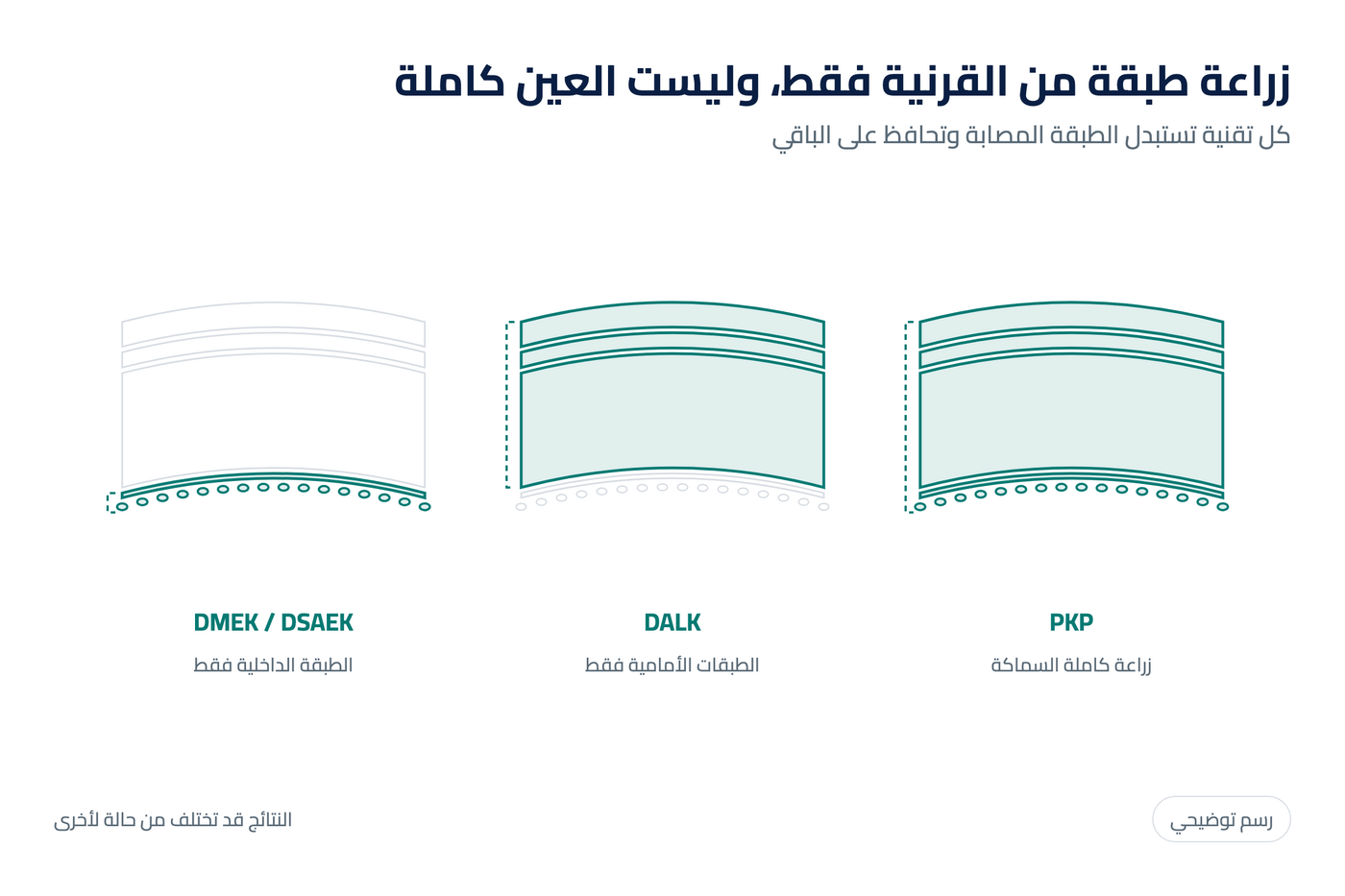
ندبة أو تليف في الطبقات الأمامية والبطانة الداخلية ما زالت سليمة
زراعة القرنية الطبقية الأمامية (DALK)
تُستبدل الطبقات الأمامية المصابة فقط، وتبقى بطانة المريض في مكانها، وهي الطبقة التي يستهدفها الرفض عادةً.

تقدير مبدئي
احسب تكلفة زراعة القرنية في دقيقتين
DALK · PKP · DMEK · DSAEK، تقدير شخصي فوري بناءً على حالتك
📖 الدليل الشامل
هذا المقال جزء من سلسلة. للحصول على الصورة الكاملة، اقرأ أنواع عمليات زراعة القرنية وتكلفتها في مصر ←
أصبح د. أحمد شعراوي، مؤسس عيادة cornea.clinic وزميل معهد ديفرز للعيون (أوريغون، 2014)، أول جراح في مصر والعالم العربي يُجري عملية S-DMEK (زراعة القرنية البطانية بختم حرف S - S-stamped Descemet Membrane Endothelial Keratoplasty): وهي عملية DMEK باستخدام نسيج متبرع يحمل علامة توجيه صغيرة على شكل حرف S. وقد عرض التقنية لأول مرة، بأنسجة DMEK المُعدّة مسبقاً (pre-stamped)، في المؤتمر الدولي الأول لمصر والشرق الأوسط لجراحات العيون بالفيمتوسكند ليزر بالقاهرة في مايو 2015. والتقنية مُوثّقة في أدبيات جراحة القرنية من مجموعة معهد ديفرز التي تدرّب معها[3][4]، وتُجرى في مصر (S-DMEK Egypt) في عيادة cornea.clinic بالقاهرة. وتتيح هذه العلامة للجراح التأكد داخل العين أن النسيج في الاتجاه الصحيح، مما يقضي على مشكلة زرع الأنسجة بشكل مقلوب، والتي كانت من الأسباب الرئيسية لفشل القرنية المزروعة الأولي في DMEK[3].
أصبحت زراعة القرنية البطانية (DMEK) المعيار المعتمد لعلاج أمراض بطانة القرنية منذ وصفها لأول مرة في عام 2006[1][2]. ومع ذلك، فإن لتقنية DMEK خطورة تقنية معروفة جيدًا. فالطُّعم عبارة عن طبقة رقيقة من غشاء ديسميه والبطانة لا يتجاوز سُمكها 10 إلى 15 ميكرومترًا، وتميل هذه الطبقة إلى الالتفاف على نفسها كلفافة، وبعد فرد اللفافة داخل العين قد تستقر بشكل مقلوب. والطُّعم المقلوب يبدو مطابقًا تمامًا للطُّعم المثبت بشكل صحيح، إلا أنه لا يستطيع ضخّ السوائل خارج القرنية، فتفشل عملية الزرع ويُضطر الجراح لإعادتها[3].
وهنا يأتي دور S-DMEK - أي زراعة القرنية البطانية بختم حرف S - لتُزيل هذه الخطورة في عملية DMEK. وهي لا تغيّر من هو المرشح المناسب، فاختيار الإجراء بين DMEK وزراعة القرنية النافذة (PKP) أو DSAEK يُحدَّد بالفحص. فقبل الجراحة، يُوضع على الجانب السدوي (stromal) من غشاء ديسميه للمتبرع ختم صغير على شكل حرف S. وداخل العين، إذا ظهر الحرف S بشكله الصحيح فهذا يعني أن الطُّعم في الاتجاه الصحيح؛ أما إذا ظهر معكوسًا (كالمرآة) فهذا يعني أنه مقلوب ويجب قلبه قبل أن تُثبّته فقاعة الغاز في مكانها. ولا توجد أي غرز جراحية في DMEK؛ فالطُّعم يُثبَّت على القرنية بواسطة فقاعة هواء أو غاز[3][4].
الفوائد السريرية لهذه التقنية كبيرة:
عندما يتعلق الأمر بإبصارك، فإن الدقة هي العامل الحاسم. نحن نستخدم تقنية S-DMEK، وهي تقنية متقدمة لزراعة القرنية تعتمد على ختم دقيق ومتخصص لتعليم نسيج المتبرع، مما يضمن توجيه النسيج بشكل مثالي أثناء العملية للحصول على أعلى درجات الأمان والفعالية. تم تطوير هذه التقنية بالأساس في معهد Devers Eye Institute الشهير في مدينة بورتلاند بولاية أوريغون - وهو المعهد نفسه الذي أتمّ فيه د. شعراوي زمالته التخصصية في القرنية. ومن خلال تدريبه المباشر في مهد تقنية S-DMEK، يُجري د. شعراوي هذه التقنية مباشرة لمرضاه في القاهرة.
تستند رحلة د. أحمد شعراوي ليصبح أول جراح S-DMEK في مصر إلى تدريب دولي صارم والتزام راسخ بنقل جراحات القرنية العالمية إلى الوطن العربي.
في عام 2014، أتمّ د. شعراوي زمالة متقدمة في جراحة القرنية والقطاع الأمامي للعين بمعهد Devers Eye Institute في بورتلاند بولاية أوريغون - أحد أعرق مراكز زراعة القرنية في أمريكا الشمالية. ويُعرف معهد Devers بأنه أحد المراكز المعروفة عالميًا في تعليم وتطوير وتحسين تقنيات DMEK. وتحت إشراف نخبة من الخبراء، أتقن د. شعراوي الطيف الكامل لتقنية DMEK، بدءًا من تحضير القرنية المزروعة وأساليب إدخالها، وصولًا إلى التعامل مع المضاعفات وحلّ المشكلات.
وفّر هذا التدريب الأساس العلمي اللازم للتقدم بعد تقنية DMEK التقليدية إلى تنويعات متخصصة مثل S-DMEK. كما أتاحت تجربة Devers لـ د. شعراوي الاطلاع على أحدث الابتكارات الناشئة في زراعة القرنية، واتباع منهج قائم على الأدلة في تحديد من يصلح له إجراء الجراحة ومن لا يصلح.
بعد إتمام زمالته، عاد د. شعراوي إلى القاهرة وأسّس عيادة cornea.clinic، وهي عيادة متخصصة في جراحات القرنية والقطاع الأمامي للعين. ومنذ تأسيسها، حافظت العيادة على المعايير العالمية في رعاية المرضى، والتقنيات الجراحية، وإدارة أنسجة المتبرعين.
على مدار العقد الماضي، قامت cornea.clinic بعلاج مئات المرضى المصابين بأمراض بطانة القرنية، وبنت سجلًا حافلًا بالنتائج الجراحية الممتازة. وقد شكّلت البنية التحتية للعيادة - بما فيها المعدات الجراحية الدقيقة، وفريق التمريض المُدرَّب، والمنهج المُمنهج للحصول على القرنيات وإعدادها - الأساس المثالي لإطلاق تقنية S-DMEK.
إلى جانب الابتكار الجراحي الفردي، عمل د. شعراوي على تعزيز تخصص زراعة القرنية في جميع أنحاء مصر. فقد أسّس الجمعية المصرية للقرنية المخروطية وزراعة القرنية (Egyptian Society of Keratoconus and Corneal Transplant، ESKC&CT)، وهي منظمة مكرّسة لـ:
يعكس تأسيس ESKC&CT الرؤية الأشمل لـ د. شعراوي: تحويل مصر إلى مركز إقليمي ودولي معتمد لجراحات القرنية المتقدمة، وتقليل حاجة المرضى المصريين للسفر إلى الخارج للحصول على علاج متخصص.
في مصر وعموم الوطن العربي، تُصيب أمراض بطانة القرنية آلاف المرضى. ومن أبرز أسبابها:
في هذه الحالات تتنوع الخيارات الجراحية وغير الجراحية، ومنها:
للمرضى المناسبين أصلًا لعملية DMEK، تحتفظ S-DMEK بشفافية DMEK وتعافيها البصري السريع، مع أمان إضافي يتمثل في التأكد من اتجاه الطُّعم، بحيث لا تتوقف نتيجة العملية على تقدير اتجاه التفاف لفافة شفافة من خلال قرنية معتمة. والختم لا يغيّر من هو المرشح المناسب لعملية DMEK.
أمثلة على حالات DMEK يفيد فيها الختم في التأكد من اتجاه الطُّعم:
تحظى خبرة د. أحمد شعراوي بتقدير واسع على المستويين الدولي والمحلي:
يمتد أثر نجاح إدخال تقنية S-DMEK في cornea.clinic إلى ما هو أبعد من د. شعراوي وحده، ليشمل طب العيون في مصر بشكل عام. فهو يُثبت أن الابتكار الجراحي المتقدم لم يعد حكرًا على المراكز الطبية الكبرى في الولايات المتحدة وأوروبا وأستراليا. فمع التدريب المناسب، والبنية التحتية المتقدمة، والالتزام بالتميز، يستطيع الجرّاحون المصريون ابتكار وتنفيذ هذه التقنيات بأنفسهم.
ومع تزايد وعي المرضى بتقنية S-DMEK ومزاياها، يُتوقع أن يرتفع الطلب على هذه العملية. كما أن استعداد د. شعراوي لإتقان هذه التقنية ونشرها قد يُلهم جراحي القرنية في مصر والوطن العربي لتوسيع مهاراتهم، مما يرفع مستوى الرعاية في المنطقة بأكملها.
كذلك يُتيح تأسيس ESKC&CT آلية رسمية لتدريب الجيل القادم من جراحي زراعة القرنية في مصر، مما يضمن أن تصبح S-DMEK وغيرها من التقنيات المتقدمة جزءًا من المنهج التدريبي القياسي بدلًا من كونها استثناءات نادرة.
إذا تم تشخيصك بأحد أمراض بطانة القرنية، مثل حثل فوكس أو اعتلال القرنية الفقاعي بعد زراعة العدسة، فاعلم أن S-DMEK هي عملية DMEK مع ختم لتحديد الاتجاه على نسيج المتبرع، ولذلك تناسب المرضى أنفسهم الذين تناسبهم DMEK التقليدية. الختم يزيل خطر الطُّعم المقلوب، لكنه لا يوسّع قائمة من يمكنهم إجراء DMEK. وتحديد ما إذا كانت DMEK مناسبة لك، بما في ذلك عدد خلاياك البطانية وحالة العين وأي جراحة سابقة، يتم أثناء التقييم.
التقييم من قِبَل أخصائي القرنية أمر جوهري، ويشمل:
إذا كنت أنت أو أحد أفراد عائلتك تعاني من مرض في بطانة القرنية، فإن د. أحمد شعراوي وفريق cornea.clinic هنا لمساعدتك. نُقدّم تقييمات دقيقة وإمكانية الوصول إلى أحدث التقنيات الجراحية، بما فيها S-DMEK.
cornea.clinic
برج جاد، الدور السابع
شارع التحرير، الدقي
القاهرة، مصر
الهاتف: +201111182081
الموقع الإلكتروني: cornea.clinic
لا تدع أمراض بطانة القرنية تُهدّد إبصارك. تواصل معنا اليوم لحجز استشارتك مع د. شعراوي.
مصادر طبية موثوقة استُند إليها في مراجعة هذا المقال:
خريطة أنواع زراعة القرنية
اختر وصف حالتك
ندبة أو تليف في الطبقات الأمامية والبطانة الداخلية ما زالت سليمة
تُستبدل الطبقات الأمامية المصابة فقط، وتبقى بطانة المريض في مكانها، وهي الطبقة التي يستهدفها الرفض عادةً.
خلل في بطانة القرنية، القرنية تحتجز الماء والرؤية أسوأ ما تكون في الصباح
العطل في الطبقة الداخلية التي تسحب الماء من القرنية، فتُستبدل هذه الشريحة الرقيقة وحدها وتبقى بقية القرنية كما هي.
إصابة أو ندبة تمتد عبر كل طبقات القرنية، أو قرنية مزروعة سابقة فشلت
حين لا تبقى طبقة سليمة يُبنى عليها، تُستبدل القرنية بكامل سماكتها.
هذا الدليل استرشادي فقط، فحص القرنية (طبوغرافيا وبنتاكام وOCT أمامي) هو الذي يحدد نوع الزراعة المناسب لحالتك
احجز كشف القرنيةالخطوة العملية التالية
القراءة بتشرح الصورة العامة، لكن اللي يناسب عينك أنت بيتحدد من الكشف مع د. أحمد شعراوي، في القاهرة أو أربيل.

مدرس (باحث) بمعهد بحوث أمراض العيون واستشاري جراحة القرنية والليزك. حاصل على زمالة سريرية وبحثية من معهد ديفرز للعيون، أوريجون، أمريكا تحت إشراف البروفيسور مارك تيري. أول من أجرى زراعة القرنية البطانية بتقنية S-DMEK في مصر والمنطقة العربية. له تقنيتان جراحيتان منشورتان في الأكاديمية الأمريكية لطب العيون (AAO).
المزيد عن الدكتور
١٨ سبتمبر ٢٠٢٥

٢٠ مايو ٢٠٢٦
٢٠ مايو ٢٠٢٦

٩ مارس ٢٠٢٦
احجز موعدك الآن
هل تستيقظ ورؤيتك ضبابية؟
تورم القرنية (Fuchs / فقد الخلايا الداخلية) يسبب ضبابية تزداد سوءاً في الصباح وتتحسن قليلاً خلال اليوم. اسحب الفاصل لترى ما يمر به المرضى.
هالات ناعمة وتشوش حول الأضواء، مع وهج خاصة في الإضاءة المنخفضة
اقرأ هذا النص بوضوح
الطبقة الداخلية للقرنية تحافظ على شفافيتها
اقرأ هذا النص بوضوح
الطبقة الداخلية للقرنية تحافظ على شفافيتها
ضبابية كأنك تنظر من نافذة مغبشة، أسوأ في الصباح
حروف ضبابية متجانسة، تتحسن قليلاً بمرور اليوم لكنها لا تختفي
عدّ الخلايا الداخلية وقياس سمك القرنية يوضحان حالتها، لا هذه الصورة