
د. أحمد شعراوي: استشاري جراحة القرنية في القاهرة وأفضل دكتور قرنية في مصر

د. أحمد شعراوي: استشاري جراحة القرنية في القاهرة وأفضل دكتور قرنية في مصر
تاريخ النشر: أبريل 2026 | التخصص الطبي: جراحة القرنية وأمراض الجزء الأمامي للعين
ليه المرضى بيسألوا عن "أفضل دكتور قرنية في مصر" تحديداً؟
لما مريض أو أهل مريض يكتبوا على جوجل "أفضل دكتور قرنية في مصر" أو حتى بالإنجليزي، هم مش بيدوروا على اسم مشهور بس، هم بيدوروا على ثلاث حاجات محددة: تدريب موثّق في جراحة القرنية تحديداً، خبرة عملية في عدد كافٍ من الحالات، ونتائج مستقرة على المدى الطويل. أنا د. أحمد شعراوي، استشاري جراحة قرنية مقيم في القاهرة، ومتخصص في تشخيص أمراض القرنية وعلاجها جراحياً وفي طب الجزء الأمامي للعين. في السطور الجاية هوضح تدريبي وخبرتي بالتفصيل، مش عشان أمدح نفسي، لكن عشان تقدر تقيّم بنفسك هل التخصص ده يناسب حالتك ولا لأ.
في عيادتنا بنقدّم رعاية متكاملة لأمراض القرنية، بنستخدم فيها التقنيات الجراحية المتعارف عليها والمعاصرة على حدٍّ سواء. الخبرة اللي راكمتها في جراحة القرنية المتقدمة، وتعاملي مع طيف عريض من أمراض القرنية، هما اللي بيدعموا دور العيادة كمركز متخصص في جراحة القرنية بمنطقة القاهرة.
إزاي اتدرّبت، وفين
زمالة جراحة القرنية
أتممت زمالتي في جراحة القرنية بمعهد Devers Eye Institute في مدينة بورتلاند بولاية أوريغون الأمريكية عام 2014. معهد Devers من المراكز الطبية المرموقة عالمياً في برامج علاج أمراض القرنية وجراحات تصحيح الإبصار وتدريب جراحي الجزء الأمامي للعين. التدريب في مؤسسة زي دي مش مجرد شهادة على الحيطة، هو اللي بيفتح لك الباب على أحدث التقنيات الجراحية والمناهج العلاجية المبنية على الأدلة، وهو نفس التدريب اللي بطبّقه دلوقتي في عيادتي بالقاهرة.
العضويات المهنية
بحافظ على عضوية فعّالة في اثنتين من أكبر المنظمات المهنية لأطباء وجراحي العيون حول العالم:
- الأكاديمية الأمريكية لطب العيون (AAO)، أكبر منظمة مهنية لأطباء وجراحي العيون، وتشترط على أعضائها الالتزام بالتعليم الطبي المستمر والتقيّد بالمعايير المهنية في طب العيون.
- الجمعية الأمريكية لجراحي المياه البيضاء وتصحيح الإبصار (ASCRS)، جمعية مهنية متخصصة في جراحات المياه البيضاء وتصحيح الإبصار وجراحة الجزء الأمامي للعين، مع التركيز على الابتكار الجراحي والممارسة المبنية على الأدلة.
- محاضرات في مؤتمرات علمية: قدّم أنسجة DMEK المُعدّة مسبقاً (pre-stamped) للمرة الأولى في مصر في المؤتمر الدولي الأول لمصر والشرق الأوسط لجراحات العيون بالفيمتوسكند ليزر، القاهرة (مايو 2015)؛ وعرض حالة DMEK معقّدة (قزحية بنية مع عتامة قرنية سطحية) في ندوة البحر الأحمر لطب العيون RSOS 2017، جدة، السعودية (يناير 2017).
العضوية في المنظمتين دول مش مجرد اسم على كارت الزيارة. هي التزام سنوي بمتابعة كل حاجة جديدة بتتنشر في جراحة القرنية، وده بالضبط اللي بحاول أنقله لمرضاي: إن القرار الجراحي اللي بتاخده معايا مبني على أحدث ما وصل له التخصص، مش على عادات قديمة.
الخبرة السريرية اليومية
شغلي اليومي بيغطي طيف عريض من أمراض القرنية، من الحالات الروتينية البسيطة، لحد الحالات الجراحية المعقّدة اللي محتاجة خبرة تخصصية عالية. وده اللي بيخليني أقدر أميّز بسرعة بين الحالة اللي محتاجة متابعة بس، والحالة اللي لازم تتحرك فيها بسرعة قبل ما تتفاقم.
إيه اللي بعمله بالظبط: مجالات التخصص الجراحي
زراعة القرنية، بأنواعها الثلاثة
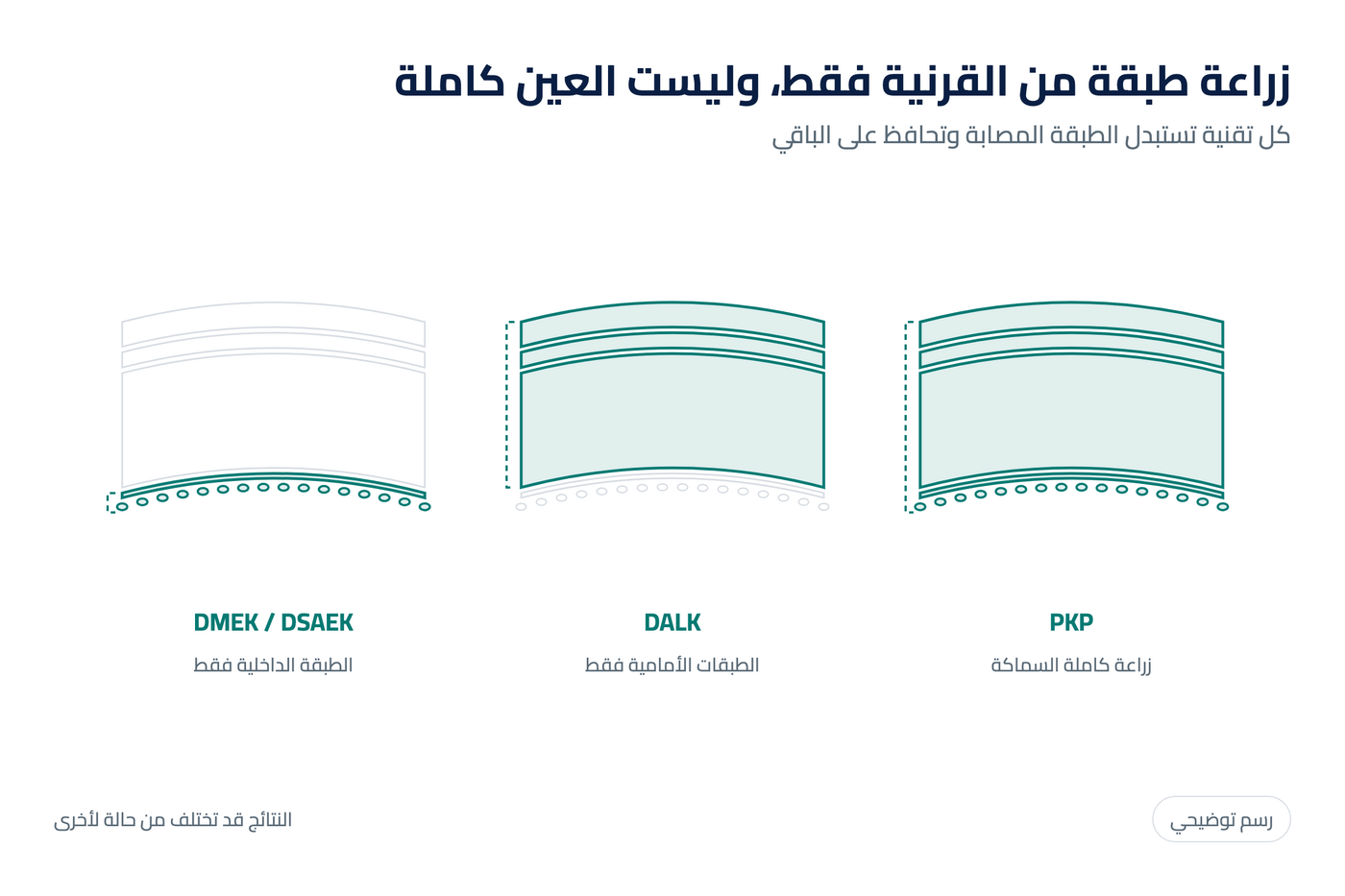
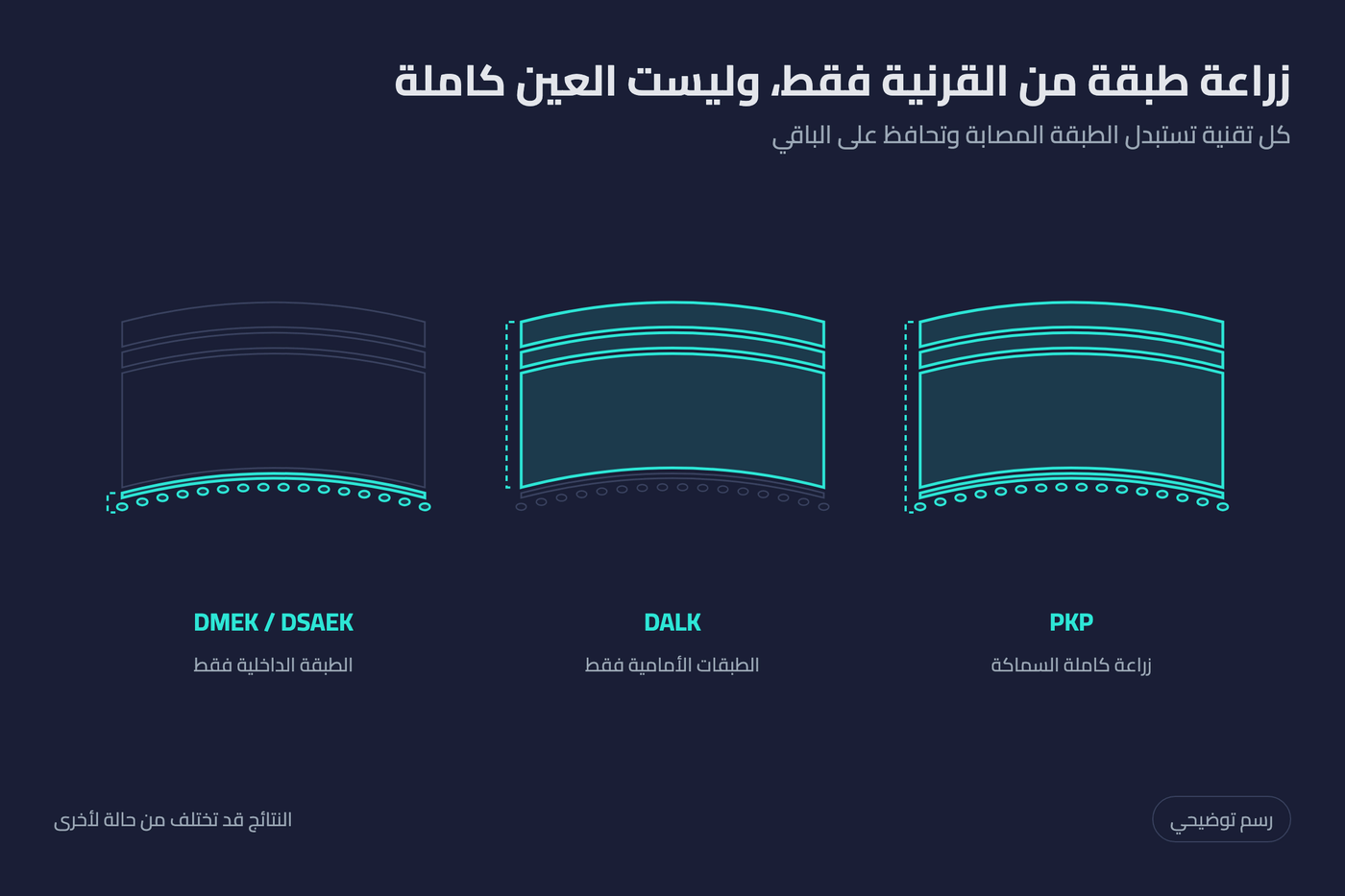
زراعة القرنية البطانية (DMEK)، دي عملية بيتم فيها استبدال الطبقة الخلوية الداخلية للقرنية فقط (الطبقة البطانية مع غشاء ديسميه)، مع الحفاظ على باقي طبقات القرنية زي ما هي. الميزة إن التقنية دي بتحافظ على السلامة الإنشائية لسدى القرنية مع استعادة شفافيتها لدى المرضى المصابين بأمراض الطبقة البطانية. الأدبيات الطبية في طب العيون بتوضح إن الـ DMEK بتوفّر مزايا مقارنة بزراعة القرنية كاملة السُمك، منها التعافي البصري الأسرع، والنتائج الانكسارية الأفضل، والبقاء طويل الأمد للقرنية المزروعة عند إجرائها على يد جرّاحين ذوي خبرة[1][2]. الـ جراحة DMEK من أكتر التقنيات اللي باشتغل بيها بانتظام.
زراعة القرنية البطانية الجزئية (DSAEK)، شكل تاني من زراعة القرنية البطانية، بيستخدم قرنية مزروعة بسُمك أكبر شوية من الـ DMEK. إجراء راسخ ومُعتمد لعلاج قصور الطبقة البطانية للقرنية، وبقدّمه للمرضى اللي حالتهم تحديداً بتستدعي التقنية دي.
زراعة القرنية النافذة (PKP)، إجراء كامل السُمك، مُستطبّ في حالات بعينها زي القرنية المخروطية المتقدمة، والتندّبات القرنية، والحالات اللي مايصلحش فيها تقنيات زراعة القرنية البطانية. عندي خبرة عالية في تقنية الـ PKP والمتابعة طويلة الأمد بعدها.
وطبعاً كل حالة ليها تفاصيلها، أحياناً بتحتاج تعديل بسيط في التقنية بما يتناسب مع تشريح المريض نفسه، مش نسخة واحدة تتكرر على الكل.
جراحات تصحيح الإبصار
الليزك (LASIK)، إجراء لتصحيح الإبصار بيعالج قصر النظر وطول النظر والأستجماتيزم. خبرتي في أمراض القرنية بتساعدني أختار المرضى المناسبين بعناية، وأستبعد الحالات اللي مايصلحلهاش الليزك أصلاً، وده جزء مهم من الأمان، مش مجرد إجراء الجراحة.
زراعة العدسات (ICL)، إجراء قابل للعكس، بيعتمد على عدسة داخل العين أمام عدسة المريض الطبيعية. بستخدمه لتصحيح الإبصار لدى المرضى المصابين بدرجات عالية من قصر النظر، أو ذوي القرنيات الرقيقة، أو اللي حالتهم مايصلحش لإجراء الليزك.
إدارة أمراض القرنية
القرنية المخروطية (Keratoconus)، مرض تدريجي بيتسم بترقّق القرنية واتخاذها شكل مخروطي. بقيّم مرضى القرنية المخروطية تقييم دقيق باستخدام أحدث تقنيات التشخيص، وبعرض خيارات علاجية بتتدرّج من العدسات اللاصقة المتخصصة، لتثبيت القرنية بالكولاجين كروس لينك لإبطاء تطوّر المرض، لحد التدخل الجراحي بزراعة القرنية لو الحالة وصلت لمرحلة متقدمة.
جراحة الجزء الأمامي للعين، عندي خبرة في إجراءات الجزء الأمامي للعين بما فيها جراحة المياه البيضاء، خصوصاً للمرضى اللي عندهم في نفس الوقت أمراض في القرنية بتتطلب تخطيطاً جراحياً منسّقاً بين الاثنين.
طيب ليه أنا تحديداً؟
مش بحب أجاوب على السؤال ده بجملة تسويقية. الإجابة الصادقة بترجع لأربع نقاط بسيطة:
تدريب موثّق، ومتابعة مستمرة
زمالتي بمعهد Devers Eye Institute وفّرتلي تدريباً على أحدث التقنيات الجراحية في القرنية وأساليب علاج أمراضها. واستمرار عضويتي في AAO وASCRS بيعكس انخراط مستمر مع الأبحاث المهنية والابتكارات الجراحية، والتزام بمعايير الممارسة المبنية على الأدلة في جراحة القرنية.
خبرة واسعة الطيف، مش تقنية واحدة بس
عندي كفاءة عبر طيف جراحة القرنية كامل: أنواع زراعة القرنية المتعددة (DMEK وDSAEK وPKP)، وجراحات تصحيح الإبصار (الليزك وزراعة العدسات)، وعلاج أمراض القرنية المعقّدة. التنوّع ده بيسمحلي أصمّم القرار الجراحي بما يلائم تشريح كل مريض وحالته السريرية، مش أضغط الحالة في تقنية واحدة عشان هي اللي باعرفها.
مواكبة التقنيات الجراحية الحديثة
ممارستي بتجمع بين التقنيات الراسخة والتقنيات المعاصرة في جراحة القرنية. الالتزام ده بمواكبة الابتكارات الجراحية بيضمن إن مرضاي يوصلوا لأحدث الخيارات العلاجية المتاحة، مش الخيارات اللي كانت متاحة من سنين.
تركيز تخصصي، مش طب عيون عام
على عكس طب العيون العام، ممارستي متركّزة على أمراض القرنية وجراحات الجزء الأمامي للعين فقط. التركيز التخصصي ده بيدعم تطوير وصقل المهارات الجراحية المتقدمة، والخبرة العميقة في المجال ده تحديداً.
المؤهلات والمعلومات المهنية
د. أحمد شعراوي، المؤهلات المهنية
| التخصص الطبي: | جراحة القرنية وأمراض الجزء الأمامي للعين |
| زمالة التدريب: | معهد Devers Eye Institute، بورتلاند، أوريغون، الولايات المتحدة الأمريكية (2014) |
| العضويات المهنية: | الأكاديمية الأمريكية لطب العيون (AAO) الجمعية الأمريكية لجراحي المياه البيضاء وتصحيح الإبصار (ASCRS) |
| التخصصات الجراحية: | DMEK وDSAEK وPKP والليزك وزراعة العدسات (ICL) وعلاج القرنية المخروطية وجراحة الجزء الأمامي للعين |
| مكان الممارسة: | القاهرة، مصر |
| نوع الممارسة: | مركز متخصص في جراحة القرنية |
أمراض القرنية الشائعة اللي بشوفها في العيادة، وإزاي بتتعالج
الحثل البطاني للقرنية (مرض فوكس)
حالة وراثية بتصيب الطبقة البطانية للقرنية وبتؤدي لتورّمها التدريجي وفقدان الرؤية. الحالات المبكرة ممكن تستجيب للعلاج الدوائي بالقطرات الموضعية، لكن الحالات المتقدمة عادةً بتحتاج زراعة قرنية. كلٌّ من DMEK وDSAEK خيارات جراحية مُعتمدة لعلاج مرض فوكس، وبقيّم كل حالة على حدة عشان أحدد النهج الجراحي الأنسب.
القرنية المخروطية
ترقّق تدريجي في القرنية وتشوّهها على شكل مخروطي. الإدارة العلاجية بتعتمد على درجة شدة المرض: الحالات المبكرة ممكن تتحكم فيها العدسات اللاصقة المتخصصة، وتطوّر المرض ممكن يتبطّأ بتقنية تثبيت القرنية بالكولاجين (كروس لينك)، أما الحالات المتقدمة فقد تستدعي زراعة قرنية. بقدّم تقييماً دقيقاً وخطة مخصّصة لكل مريض ضمن خدمة علاج القرنية المخروطية.
تندّبات القرنية وعتامتها
ممكن تندّب القرنية ينتج عن إصابة، أو عدوى، أو جراحة سابقة، أو مرض التهابي. الإدارة العلاجية بتعتمد على موقع التندّب وامتداده ومدى تأثيره على الرؤية، والخيارات بتتراوح بين العلاجات السطحية وزراعة القرنية. خبرتي في تقنيات جراحية متعددة بتسمحلي أختار الأسلوب الأنسب لكل نمط تندّب.
اعتلال القرنية الفقاعي بعد جراحة المياه البيضاء (PBK)
بيحصل لما تتضرر الطبقة البطانية للقرنية أثناء عملية المياه البيضاء أو بعدها، وده بيؤدي لتورّم القرنية وفقدان الرؤية. زراعة القرنية (DMEK أو DSAEK) هي العلاج الجذري لهذه الحالة، وخبرتي في زراعة القرنية البطانية بتقدّم حلول جراحية فعّالة لمرضى الـ PBK.
عيوب الإبصار (قصر النظر وطول النظر والأستجماتيزم)
للمرضى اللي مافيش عندهم موانع طبية من إجراء جراحات تصحيح الإبصار، الليزك بيوفّر تصحيحاً دائماً لقصر النظر وطول النظر والأستجماتيزم. أما المرضى ذوو القرنيات الرقيقة أو اللي حالتهم مايصلحش للّيزك، فبتقدّملهم زراعة العدسات (ICL) بديلاً انكسارياً فعّالاً. والتقييم الدقيق للقرنية قبل الجراحة هو اللي بيضمن اختيار المرشح المناسب لكل تقنية.
أسئلة بيسألهالي المرضى كتير
إيه هي جراحة DMEK وإيه مزاياها في علاج أمراض الطبقة البطانية للقرنية؟
الـ DMEK إجراء بيتم فيه استبدال الطبقة الداخلية للقرنية فقط (غشاء ديسميه والطبقة البطانية). على عكس زراعة القرنية كاملة السُمك، الـ DMEK بتحافظ على باقي طبقات القرنية. المنشور في دوريات طب العيون بيوضح إن الـ DMEK بتوفّر مزايا تشمل التعافي البصري الأسرع، وتقليل التغيّرات الانكسارية والأستجماتيزم، والبقاء الجيد طويل الأمد للقرنية المزروعة مقارنةً بزراعة القرنية كاملة السُمك في الحالات المناسبة[1][2]. خبرتي في الـ DMEK بتوفّر للمرضى الوصول لهذه التقنية الجراحية المتقدمة.
إيه الفرق بين جراحتي DMEK وDSAEK؟
كلتا الجراحتين من إجراءات زراعة القرنية البطانية، لكنهما بيختلفوا في سُمك القرنية المزروعة والتقنية الجراحية. الـ DSAEK بتعتمد على قرنية مزروعة أسمك شوية، وطُوِّرت قبل الـ DMEK، ولسه إجراء فعّال. أما الـ DMEK فبتعتمد على قرنية مزروعة أرفع بكثير، بتتكوّن فقط من غشاء ديسميه والطبقة البطانية دون سدى القرنية. الدراسات المقارنة بتُظهر إن الـ DMEK بتوفّر عادةً تعافياً بصرياً أسرع وحدة إبصار نهائية أفضل من الـ DSAEK، رغم إنها بتتطلب مهارة جراحية أعلى[3][4]. تدريبي وخبرتي بيمكّناني من تقديم كلتا التقنيتين، واختيار الأنسب لتشريح كل مريض وحالته.
قد إيه فترة التعافي بعد عملية زراعة القرنية؟
فترة التعافي بتعتمد على نوع عملية زراعة القرنية. الـ DMEK عادةً بتوفّر رؤية مفيدة خلال أسابيع لحد بضعة أشهر، رغم إن استقرار الرؤية ممكن ياخد وقت أطول. أما الـ DSAEK فلها تعافٍ بصري أبطأ نسبياً. وزراعة القرنية النافذة (PKP)، وهي إجراء كامل السُمك، عادةً ليها أطول فترة تعافٍ، ممكن توصل لـ 12 شهراً أو أكتر، نظراً للإزالة التدريجية للغُرز وإدارة التغيّرات الانكسارية. بقدّم تعليمات تفصيلية للرعاية بعد العملية ومتابعة مستمرة لتحقيق أفضل تعافٍ ممكن.
إيه اللي بيحدد هل المريض محتاج DMEK ولا زراعة قرنية نافذة؟
الـ DMEK مناسبة للمرضى المصابين بأمراض الطبقة البطانية مع بقاء سدى القرنية صافياً نسبياً، زي مرض فوكس واعتلال القرنية الفقاعي بعد جراحة المياه البيضاء (PBK). أما زراعة القرنية النافذة (PKP) فهي مُستطبّة عند وجود مرض يصيب سدى القرنية الأمامي، كالتندّبات المتقدمة أو القرنية المخروطية أو العدوى. وبقيّم تشريح قرنية كل مريض ونوع المرض واحتياجاته البصرية لتحديد النهج الجراحي الأنسب.
إيه العوامل المؤثرة في نجاح زراعة القرنية؟
نتائج زراعة القرنية بتعتمد على عوامل متعددة: نوع الإجراء (DMEK أو DSAEK أو PKP)، وجودة القرنية المتبرَّع بها، وعوامل المناعة لدى المريض، ودواعي الجراحة، والالتزام بالأدوية والرعاية بعد العملية، وخبرة الجرّاح. الدراسات بتشير إن إجراءات زراعة القرنية البطانية الحديثة بتحقّق نسب بقاء جيدة للقرنية المزروعة عند إجرائها على يد جرّاحين ذوي خبرة[1][5].
خلاصة الكلام
أنا جرّاح قرنية جمعت بين التدريب المتقدم في الزمالة بأمراض القرنية وجراحة الجزء الأمامي للعين، والعضوية في كبرى المنظمات الدولية لطب العيون، والخبرة الواسعة في كامل طيف جراحات القرنية. تركيزي التخصصي على أمراض القرنية، جنباً إلى جنب مع التدريب والخبرة الجراحية، هو اللي بيسمحلي أقدّم رعاية عالية الجودة لمرضى القرنية وأمراض الجزء الأمامي للعين.
للمرضى في القاهرة والمنطقة المحيطة اللي بيدوروا على رعاية متخصصة للقرنية، سواء لزراعة القرنية، أو جراحات تصحيح الإبصار، أو علاج القرنية المخروطية وغيرها من أمراض القرنية، بقدّم خبرة جراحية متقدمة ورعاية متكاملة تتمحور حول المريض. احجز استشارتك الآن عشان نقيّم حالتك سوا ونحط خطة علاجية مخصّصة ليك.
المراجع
- Deng SX, Lee WB, Hammersmith KM, et al. Descemet Membrane Endothelial Keratoplasty: Safety and Outcomes: A Report by the American Academy of Ophthalmology. Ophthalmology. 2018;125(2):295-310. PMID: 28923499
- Anshu A, Price MO, Price FW Jr. Risk of corneal transplant rejection significantly reduced with Descemet's membrane endothelial keratoplasty. Ophthalmology. 2012;119(3):536-540. PMID: 22218143
- Tourtas T, Laaser K, Bachmann BO, Cursiefen C, Kruse FE. Descemet membrane endothelial keratoplasty versus Descemet stripping automated endothelial keratoplasty. Am J Ophthalmol. 2012;153(6):1082-1090. PMID: 22397955
- Stuart AJ, Romano V, Virgili G, Shortt AJ. Descemet's membrane endothelial keratoplasty (DMEK) versus Descemet's stripping automated endothelial keratoplasty (DSAEK) for corneal endothelial failure. Cochrane Database Syst Rev. 2018;6(6):CD012097. PMID: 29940078
- Birbal RS, Ni Dhubhghaill S, Bourgonje VJA, et al. Five-Year Graft Survival and Clinical Outcomes of 500 Consecutive Cases After Descemet Membrane Endothelial Keratoplasty. Cornea. 2020;39(3):290-297. PMID: 31478948
خدمات ذات صلة
الخطوة العملية التالية
خلصت المقال ولسه محتار في حالتك؟
القراءة بتشرح الصورة العامة، لكن اللي يناسب عينك أنت بيتحدد من الكشف مع د. أحمد شعراوي، في القاهرة أو أربيل.

مدرس (باحث) بمعهد بحوث أمراض العيون واستشاري جراحة القرنية والليزك. حاصل على زمالة سريرية وبحثية من معهد ديفرز للعيون، أوريجون، أمريكا تحت إشراف البروفيسور مارك تيري. أول من أجرى زراعة القرنية البطانية بتقنية S-DMEK في مصر والمنطقة العربية. له تقنيتان جراحيتان منشورتان في الأكاديمية الأمريكية لطب العيون (AAO).
المزيد عن الدكتورمقالات مقترحة



احجز موعدك الآن